What Is Casting in Golf Swing?
Casting in golf is a swing flaw where a player unhinges their wrists prematurely during the downswing, releasing clubhead lag way too early.
Instead of holding power into impact, the golf club dumps energy near the top of the downswing like a fisherman throwing a line.
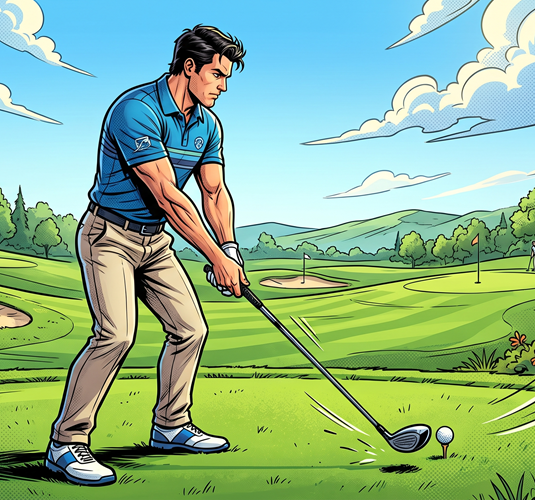
This early release ruins compression, strips away clubhead speed, and forces many golfers to scoop at the golf ball.
Your subconscious brain often causes casting when trying to force contact using only the upper body and arms.
Learning to stop casting is essential for achieving solid contact, proper weight transfer, and consistent power on every shot.
What Is Casting in Golf Swing Mechanics?
In golf, casting the golf club is a swing flaw where a player releases the wrist angle too early in the downswing, mimicking the motion of a fisherman casting a fishing rod.
Instead of holding the angle between the lead arm and the club shaft down toward the golf ball, the wrists extend outward near the top of the backswing.
Casting is often confused with coming over the top, but they are not the same move: casting is an early release of wrist hinge, while coming over the top is an out-to-in swing path.
For golfers trying to make sense of inconsistent contact, weak shots, or lost distance, this is one of the most common faults to understand and fix.
When you maintain wrist hinge, you create lag—the storage of kinetic energy. Casting dumps that energy into thin air halfway down.
By the time the clubhead meets the ball, it has already lost acceleration, resulting in a weak, scooping strike.
That’s why this matters so much to ball striking, speed, accuracy, and ball flight.
Below, I’ll explain what casting looks like in the swing, why it happens, how it hurts your game, and the drills and swing adjustments that help you stop casting and hit the ball more solidly and consistently on the course.
Why Do Golfers Struggle With Casting?
Understanding why many golfers suffer from casting issues starts with analyzing body movement and the natural instincts of the human brain.
1. The Need to “Hit” the Ball
Your subconscious brain knows the golf ball is sitting stationary on the ground. Many golfers mistakenly treat casting as an isolated problem, but most people see it as part of a larger motion pattern.
If your body realizes the club head won’t reach the ball based on your swing path, it applies force too early and forces your right hand and wrists to throw the club at the ball to make contact.
Most golfers who cast also tend to fight related swing faults rather than just one issue.
2. Poor Lower Body Rotation
When the lower body stalls during the first move of the downswing, poor sequencing forces the upper body and arms to take over instead of the lower body starting down with a push from the ground.
Without hips rotating toward the target, the shoulders often take over too early, and the only way to drive the golf club to the ball is by throwing the wrists.
3. Open Clubface at the Top
If your clubface is wide open at the top of the backswing, your brain instinctively flips your right hand and left hand early to square the face before impact. This subconscious reaction causes an early release.
Consequences of Casting on Your Game
Casting ruins ball striking consistency on the golf course and can affect how you play from shot to shot.
Here is how early release harms your performance:
- Loss of Distance: Dumping wrist lag early destroys clubhead speed and power before the strike.
- Inconsistent Contact: Early wrist release leads to fat shots (hitting the ground first) or thin shots (catching the golf ball above the equator).
- High, Weak Ball Flight: Casting adds dynamic loft, producing high, floating shots that stall out in the wind.
- Early Extension: When you cast, your body instinctively stands up at impact to make room for the club, forcing an early extension pattern.
How to Fix Casting
Proven Drills & Swing Adjustments
To fix casting, you must change your swing feel so proper rotation can hold your wrist angles naturally without a forced hand release.
Drill 1: The Trail-Arm Pump Drill
- Take a right-handed golfer setup (or mirror for left-handed).
- Take the golf club to the top of the swing.
- Pause to create a brief moment of rest at the top, then start the downswing by shifting weight to your front foot while keeping your wrists hinged.
- Stop when your lead hand reaches hip height. Check that the shaft is parallel to the ground.
- Pump back up to the top, repeat twice, and then complete a full, smooth swing, focusing on the sequence rather than rushing the motion.
Drill 2: The Alignment Stick Extension
Focus on keeping your lead hand leading the clubface so the stick stays away from your ribs through the hitting zone.
Insert an alignment stick into the top of your grip so it extends 12 to 18 inches past your lead hip.
Take slow swings in slow motion.
If you cast the club, the stick will slap your lead side before impact.
CHAPTER 6
Frequently Asked Questions
How Do I Know If I’m Casting Golf?
You can identify casting through direct ball-flight results and visual swing feedback.
Common on-course symptoms include hitting fat shots behind the ball, catching shots thin, or experiencing a noticeable lack of distance despite high swing effort.
Visually, if you record your golf swing on video from a down-the-line angle, check your wrist angles at the moment your lead arm is parallel to the ground during the downswing.
If the angle between your lead arm and the shaft has already opened up beyond 90 degrees, you are casting the golf club.
Another clear indicator is your impact position: if the shaft is leaning backward rather than leaning forward toward the target, your wrists have released prematurely.
How Do I Stop Casting in Golf?
To stop casting, you must address the root cause rather than just forcing your hands to stay still.
First, ensure your lower body leads the transition: shift your weight to your front foot and rotate your hips toward the target before accelerating your arms.
Second, check your clubface alignment at the top of the backswing. If the face is open, work on your grip or wrist flexion to keep it square.
A neutral grip helps maintain wrist angles through impact, removing your brain’s urge to flip the wrists to compensate.
Practicing full swings in slow motion while focusing on leading with the butt end of the club helps rewire your motor patterns for compressed, solid impact, which should make more sense than simply trying to hold lag with the hands.
What Does Casting Cause in Golf?
Casting causes a severe loss of distance, inconsistent ball striking, and directional errors.
When you release wrist hinge early, the clubhead reaches its maximum speed prior to reaching the golf ball, meaning energy is wasted in the air rather than transferred into impact.
Additionally, casting adds excessive loft to the club, resulting in high, weak shots that fail to penetrate the wind.
It also forces mechanical compensations like early extension, where your body stands up to avoid digging the club into the ground.
The end result is poor contact, inconsistent distance control, and frustrating greenside or fairway misses.
Does Scottie Scheffler Hinge His Wrists?
Yes, Scottie Scheffler hinges his wrists, but his wrist action is unique compared to traditional swing models.
Scheffler sets his wrists somewhat later in the backswing and keeps his lead arm slightly soft, which gives his swing a fluid, relaxed appearance.
In the downswing, Scheffler maintains exceptional lag without aggressively pulling or snapping his wrists.
His intense lower-body drive and rotation pull the club through impact with forward shaft lean, allowing him to compress the ball with world-class consistency while avoiding early release flaws.