How to Stop Pushing the Golf Ball Consistently
To stop pushing the golf ball, you must square your clubface relative to your swing path at impact rather than leaving it open to your target line.
For most right-handed golfers, that means strengthening your grip to a neutral or slightly strong position, keeping a flat lead wrist through impact, and rotating your hips properly rather than sliding them.
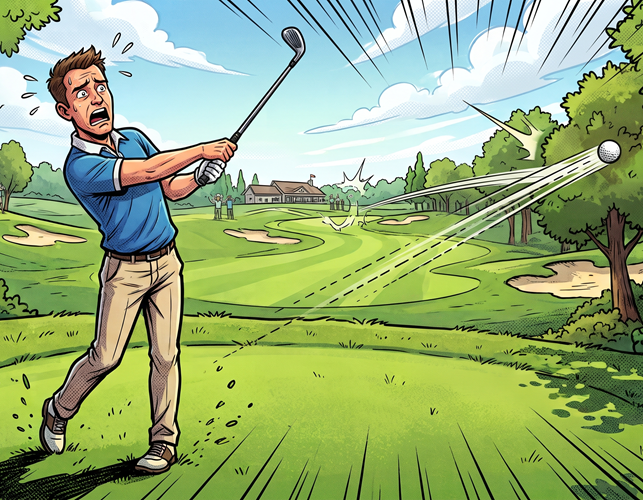
When you hit a pushed shot, the ball starts to the right of your target and flies on a straight line without curving back.
As a professional golfer who has spent decades analyzing ball flight data, I can tell you that this frustrating miss is rarely a single isolated error.
It is a mechanical failure in which your club path flashes out to the right while your clubface remains blocked open, costing you accuracy, confidence, and better scores.
If you are tired of watching your iron shots and driver tee shots leak out into the right rough, this guide breaks down the ball-flight physics behind the push, the grip and wrist changes that square the face, the swing path and body-rotation errors that cause the miss, and the setup, ball-position, equipment, and drill fixes that help you start hitting straighter shots.
Understanding the Physics of Your Ball Flight
A pushed shot occurs when your clubface is open to the target line at the exact moment of impact while traveling on an inside out path.
Many golfers confuse a push with a slice, but the physics are completely different based on the spin of the golf ball.
A slice starts straight or left, then curves violently to the right because the face is open relative to an outside-in path.
A true push has very little side spin; it simply starts right and stays right because the club path and clubface angles are aligned toward the right field.
When most golfers hit long irons or a driver, this error is amplified because the longer shafts make it harder to rotate the club head in time.
To diagnose your specific miss on the range, look closely at where the ball starts. If your iron shots consistently launch right of your stance line immediately, your clubface open position is the primary culprit.
If you are sliding your hips instead of rotating them properly, your arms will trail behind your lower body, making it physically impossible to get the club face square in time.
The Role of Grip and Wrist Angles at Impact
You can correct an open clubface by shifting from a weak grip to a neutral grip or slightly strong grip during setup.
A weak grip hides the knuckles of your left arm and forces the hands into a position that naturally opens the club face during the golf swing.
By rotating your hands slightly to the right at setup, you allow the wrists to naturally square the club at impact without needing to flip your hands.
Beyond the initial grip, managing your wrist angles throughout the swing is the ultimate secret to fixing a pushed shot.
To keep the clubface square, you must keep your lead wrist flat or slightly bowed at the top of the backswing and through the hitting zone.
If your lead wrist cups (extends), the club face immediately opens relative to your swing path.
- Weak Grip: The “V” shapes formed by your thumbs point toward your chin, leading to an open face.
- Neutral Grip: The “V” shapes point toward your right ear, allowing natural club rotation.
- Flat Lead Wrist: Eliminates horizontal clubface drift and ensures predictable ball flight.
Correcting Club Path, Swing Path, and Body Rotation Errors
To fix an exaggerated inside out path, you must stop sliding your lower body toward the target and instead focus on rotating your hips around a stable axis.
When right handed players slide their hips horizontally during the downswing, their upper body tilts backward, dragging the arms too far inside. This forces the club to attack the ball from an extreme inside angle, pushing the shot right.
Your chest and shoulders must rotate in sync with your lower body to allow the arms to exit left after impact. If you stop pushing your body forward and instead allow your hips to turn open toward the target, your club path will naturally neutralize.
A helpful visual is to imagine your lead hip clearing behind you, which clears space for your left arm to swing freely along the intended line rather than getting stuck behind your hips.
Adjusting Ball Position and Equipment Setup
Moving the ball slightly forward in your stance gives the club face more time to square up before it meets the ball. Moving the ball forward also helps the wrists release and the face square more reliably, especially with longer clubs.
If you place the golf balls too far back in the middle of your stance, you will catch the ball too early in the downswing arc when the path is still moving outward and the clubface is open.
For standard iron shots, the ball should sit just forward of center, while the driver demands a position inside your lead heel.
Additionally, you should have the lie angles of your irons checked by a certified club fitter. If your club lie angles are too flat, the toe of the club will strike the ground first, forcing the face to swing open and causing a push.
Ensuring your gear matches your posture prevents the equipment from fighting your structural adjustments.
Practical Drills to Stop Pushing the Ball
The Alignment Stick Gate Drill
To fix your swing path, place an alignment stick in the ground three feet in front of your ball, directly on your target line. Practice hitting shots on the range, with your primary focus on launching the ball to the left side of the stick.
If you hit a pushed shot, the ball will immediately fly to the right of the stick, providing instant visual feedback on your club path.
The Lead Wrist Flat Glove Drill
Tuck a small plastic card or golf tee into the back of your glove watchband across your lead wrist.
During your golf swing practice, if you cup your wrist at the top or at impact, the club will dig into the back of your hand.
Focus on keeping the club face flat against your arm to ensure a square club face throughout the hitting zone.
How to Stop Pushing the Golf Ball
Frequently Asked Questions
Why am I pushing the golf ball?
You are pushing the golf ball because your clubface is open relative to your target line at impact while your swing path is moving too far from the inside out, a common miss among golfers.
This combination causes the ball to launch straight to the right for right-handed players without curving back.
It is commonly triggered by a weak grip, a cupped lead wrist, or a lower body that slides horizontally toward the target rather than rotating properly, leaving the arms stuck behind the body.
If the ball starts right, something is wrong with the face-to-path relationship.
How to fix pushing the ball?
To fix pushing the ball, pull the club through with body rotation rather than letting your arms lag and open the face.
Strengthen your grip to a neutral position, maintain a flat lead wrist through impact, and focus on rotating your hips rather than sliding them.
Moving the golf ball slightly forward in your stance also gives the clubface extra micro-seconds to close and square up.
Using alignment stick drills on the range will help your club path follow a more neutral target line. That’s practical advice for stopping pushes.
Can I golf with spinal stenosis?
Yes, you can golf with spinal stenosis provided you modify your posture and swing intensity to minimize lumbar extension and compression.
Shortening your backswing, adopting a more upright stance, and focusing on smooth torso rotation rather than an aggressive lower body snap will significantly reduce spinal stress.
Always consult your physician or a physical therapist before heading to the course to ensure your movement patterns are safe for your specific spine.
Is a golf ball good for plantar fasciitis?
Yes, rolling your foot over a golf ball is an effective myofascial release technique to alleviate the pain of plantar fasciitis. Sitting in a chair and rolling the ball under your foot’s arch with moderate pressure stretches the plantar fascia ligament and increases local blood flow.
Spend roughly two to three minutes per foot daily, but be careful not to apply excessive pressure, which could aggravate the inflammation.