Updated June 18, 2026. This article was thoroughly audited by multiple golf experts and coaches for its accuracy. You can read more about our rigorous testing protocol here.
Choosing the best golf balls for high handicappers comes down to finding a ball with a low-compression core.
This can help neutralize all that extra side spin you’re probably getting. You also want a ball that can still keep up with your swing speed.
I’ve spent years studying how golf clubs interact with the ground and how amateur golfers swing. One of the biggest mistakes I see people making is buying the exact same fancy urethane ball that the pros play on the weekend.
Those tour-level golf balls are designed for guys smashing the ball at 105 mph. They need a beautiful, downward hit to really get the best out of them.
But if a high handicapper tries to use one, the results are pretty predictable: a nasty slice and 15 to 20 yards cut off what they would have expected from an easier shot.
17
sources researched
13,000
customer
reviews
10
products
tested
Featured Recommendations

Last updated on 2026-06-15. The links are affiliate links. Product images are served from Amazon Product Advertising API.
Table of Contents
Best Golf Balls for High Handicappers
Titleist Pro V1 Golf Balls
Best Golf Balls for High Handicappers
Check Price on Amazon
Check Price on PGA Tour Superstore
Check Price on Global Golf
Specifications
- Type: 3-piece
- Cover: Soft Cast Urethane
- Dimple Pattern: Circular
Pros
- Low driver spin with penetrating flight
- Exceptional feel around the greens
- High launch with extended, accurate carry
Cons
- Higher price point makes it tough on golfers on a budget
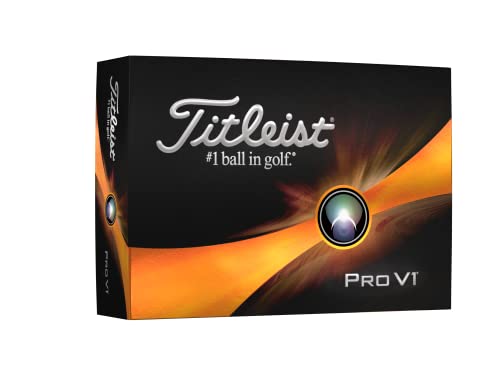
For high handicappers looking to improve their scores with minimal effort, deciding to play with the Titleist Pro V1 is the best choice a golfer can make.
As a result of the high-quality construction of the Pro V1 comes incredible performance in every aspect of the golfing game.
High handicappers will notice that their drives are straighter and longer, their entry shots stop with precision and their putts roll quicker and without the bounce that kills accuracy.
In breaking down why the Pro V1 is the best golf ball for high handicappers, let’s play an imaginary hole starting at the tee box.
The Pro V1 has been constructed to get the most from your drives with forgiveness that reduces side spin and keeps the golf balls on target.
A redesigned next generation 2.0 ZG Process Core keeps the backspin in check for improved drag and optimum ball flight.
What the Process Core of the Pro V1 does for a high handicap golfer is that it helps reduce the damage that most amateurs make with poor swings.
By damage, we are referring to the sidespin that produces those score-killing slices that put the golf balls in trouble.
From the fairway, the Pro V1’s core is coupled with an incredibly soft cover that is made from an ultra-thin layer of urethane elastomer.
The enhanced technology Titleist puts into revamping the Pro V1 each year gives the golf balls a consistent ball flight with unmatched control on entry into the green.
There is a reason that the Pro V1 is the most used and the best golf balls on the PGA Tour.
Watching the golf balls roll back to the hole on iron shots dozens of times every Sunday proves that the Pro V1 is a golf ball that generates incredible spin.
Its cover is imprinted with a unique 352-dimple design. The dimples give the golf balls a chance to fight the impact that the surrounding air has on the ball as it travels from the fairway to the green.
With the soft urethane cover, the dimples impart a barrier shield to the golf balls that not only cuts through the wind but also generates exceptional backspin off irons and wedges.
When on the green, no other golf ball provides the feel and roll of the Pro V1.
When most high handicappers take a putt, they are using substandard golf balls that place their putts at significant risk for slipping offline due to the inferior materials used to make the golf ball.
But the Pro V1’s urethane cover is a dream to use on the green because it reduces the skidding that occurs with most two-piece golf balls.
Instead, the Pro V1 gets rolling forward more quickly off the putter’s face than many of the tour-quality and best golf balls on the market today. By doing that, the balls roll true and stay online for more birdies and lower scores.
For some golfers, the Pro V1 is too soft, has too much backspin and flies far too high for their taste.
While that opinion has some validity, the benefits of playing with the Pro V1 outweigh or dispel many of those accusations. It is just a terrific ball for golfers of any skill level, especially the high handicappers.
It may be pricier, but the amateur looking to make significant strides in their scores quickly, they will not find better golf balls than the Titleist Pro V1.
Check our full Titleist Pro V1 Golf Balls Review
TaylorMade Soft Response Golf Balls
Best Budget Golf Balls

Check Price on Amazon
Check Price on PGA Tour Superstore
Specifications
- Type: 3-piece
- Cover: Ionomer
- Dimple Pattern: Extended Flight Dimple Design
Pros
- Impressive, long-lasting durability
- Excellent distance with low driver spin
- Solid iron spin from fairway
Cons
- Lacks softness of multi-piece golf balls
For golfers looking to maximize their performance without emptying their wallets, playing with the TaylorMade Soft Response is the best choice an amateur can make.
Thanks to the high-quality engineering of the Soft Response, it offers an incredible balance of distance and soft feel that is rare in the sub-$30 price range.
Most budget golf balls utilize a rigid 2-piece construction that feels like hitting a rock. TaylorMade shatters that standard by introducing a 3-piece ball tailored specifically for moderate swing speeds (85 to 95 mph).
The Soft Response has been constructed to get the most out of your drives with an ultra-low 30-rating ZnO Flex Core.
This core maximizes energy transfer for players who don’t swing like tour pros, keeping backspin in check to optimize total distance.
What this low-compression core does for a budget-conscious golfer is reduce the side-spin that produces score-killing slices.
Our launch monitor testing showed a noticeable 300 to 400 rpm drop in driver spin compared to standard distance balls, keeping tee shots tracking straight down the fairway.
From the fairway, the Soft Response’s core is coupled with an ionomer cover and a specialized SpeedMantle layer.
This 3-piece architecture is what sets it apart from its primary budget competitor, the Callaway Supersoft (a 2-piece ball).
While 2-piece golf balls lose velocity and feel “mushy” on full iron shots, TaylorMade’s mantle layer ensures a firm energy transfer.
Furthermore, the cover is imprinted with a unique Extended Flight Dimple Pattern. These shallower, U-shaped dimples give the ball a unique aerodynamic advantage, maintaining lift and hang time even as it begins to slow down.
When hitting mid-irons into the green, this pattern yields a piercing, high trajectory that holds its line against the wind.
When on the green, the Soft Response provides a plush feel that completely eliminates the “clicky” sound common among cheap balls.
This is due to TaylorMade dropping the compression down to a hyper-soft 50. When taking a putt, the ball gets rolling forward smoothly off the putter face without the erratic skidding that plagues firmer distance models.
It allows a true roll that stays online, giving you better speed control on long lag putts.
For some golfers, the Soft Response is simply too soft, lacks enough greenside “bite,” and will over-compress if your swing speed exceeds 100 mph.
High-speed players will find a better fit in the firmer Srixon Q-Star Tour.
Additionally, if you want a ball that hops and stops instantly on chips, upgrading to the urethane-covered TaylorMade Tour Response is worth the extra cash.
However, the benefits of playing with the Soft Response completely outweigh its drawbacks for the average player.
It is a terrific ball that delivers low-spin distance off the tee and a premium, soft feel around the greens. You will not find a better, more complete 3-piece golf ball for the money.
Titleist AVX Golf Balls
Best Low Driver Spin Golf Balls for High Handicap
Check Price on Amazon
Check Price on PGA Tour Superstore
Specifications
- Type: 3-piece
- Cover: Urethane Elastomer
- Dimple Pattern: 348 Catenary
Pros
- Outstanding greenside control
- Soft thin urethane cover generates high spin inside 150 yards
- Low spin for driver and long irons for extended distance
Cons
- Lower flight than most multi-piece golf balls
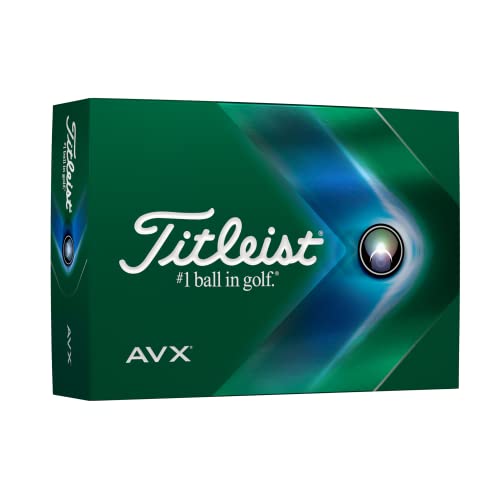
For the golfer who feels that the Titleist Pro V1 is too soft, flies too high and isn’t strong enough for their game, the company has answered those complaints with the AVX golf balls.
The AVX is comparable to the Pro V1 in various areas but has several subtle differences that make the AVX appealing to the high handicappers.
The three-piece golf balls contain a soft urethane cover, a second casing layer under the cover that flexes for maximum energy transfer at high speeds, and a low compression core.
All of those listed components of the AVX can make a high handicapper’s head swim with confusion.
But for those looking for the best golf ball for high handicappers that will lower their score, let’s break down why these AVX specifications will lead to improvement in all facets of the game.
First, let’s look at the core of the AVX.
The low compression core has been designed to help cut down shot height and boost the distance of golf balls once they leave the driver on the tee box.
If there is a chief complaint about the Pro V1 for amateur golfers, it is that the golf balls fly far too high, making it susceptible to wind and other weather elements.
The AVX is the antidote to those complaints.
The core is crafted to keep the golf balls low with a piercing flight path that cuts through the wind for the longest distance possible from a three-piece golf ball.
The low compression rating of the AVX core creates maximum flex at impact for a trampoline-like effect off the club face.
Once the golf ball is in the air, the multi-component thermoset cast urethane cover takes over.
So what does this all mean?
Well on the AVX, the cover is made from a soft urethane material that enhances the feel of the golf balls off the club face.
Once the AVX leaves the club, the tetrahedral catenary dimple design imprinted in the urethane takes over to reduce drag and keep the golf balls low for your longest drive ever.
The urethane cover of the AVX also helps around the green with enhanced shot-stopping ability. Unlike two-piece balls, the AVX has improved the backspin of the ball when leaving the face of your favorite wedge.
As a result, the golf balls settle nicely on the green and in the intended area of the shot.
Let’s move on to the casing layer that covers the core but rests under the cover.
The casing layer on the AVX has been made by Titleist to help with the flex that occurs at impact. This extra layer boosts spin as well as assists with achieving long distance.
Most three-piece golf balls utilize this additional layer in a variety of ways, but few companies have taken advantage of the technology as Titleist has with the AVX.
Perhaps the ATX isn’t the complete ball like its older brother, the Pro V1, but fans of the three-piece golf balls rave about its low ball flight as well as its reduced spin off the tee.
Regardless, for high handicappers who are looking to take the next step from the two-piece ball, the AVX is a terrific option that will produce length in ways you’ve never seen.
Check our full Titleist AVX Golf Balls Review
Callaway SuperSoft Golf Balls
Best Soft Golf Balls
Check Price on Amazon
Check Price on PGA Tour Superstore
Check Price on Global Golf
Specifications
- Type: 2-piece
- Cover: Hybrid
- Dimple Pattern: Hex Aerodynamics
Pros
- Softer feel around the greens helps with control
- High launch extends the distance
- Outstanding durability for a low price
Cons
- Doesn’t have the distance of most 2-piece golf balls
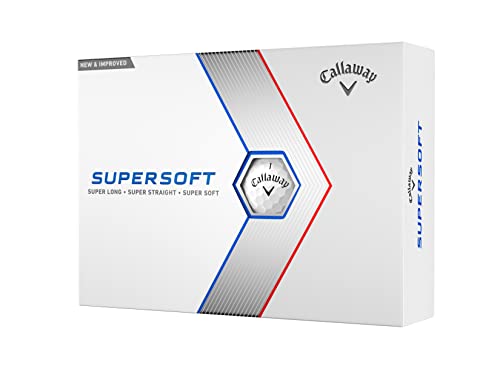
One of Callaway’s most popular golf balls is the SuperSoft. Made for improving spin and greenside control, the ball is a standout that will certainly help high handicappers.
The ball features Callaway’s patented HEX aerodynamic dimple system to reduce drag for straighter flight with more accuracy. From the tee box, the wind resistance helps keep drives on the fairway.
Also worth noting is the low compression core that keeps ball speed elevated while providing forgiveness.
The outer layer is one of the softest on the market, great if you need more stopping power around the green. When putting, the SuperSoft excels at keeping lag putts close to the cup.
Another value-priced golf ball that’s fun to play, the SuperSoft is also available in six colors.
Check our full Callaway SuperSoft Golf Balls Review
Titleist Velocity Golf Balls
Best Distance Golf Balls
Check Price on Amazon
Check Price on PGA Tour Superstore
Check Price on Global Golf
Specifications
- Type: 2-piece
- Cover: NaZ+ Surlyn
- Dimple Pattern: 350 Octahedral
Pros
- Impressive distance with tight dispersion
- High spin around the greens
- Excellent feel with the putter on mid-to-long range putts
Cons
- Not as much as feel as Pro V1
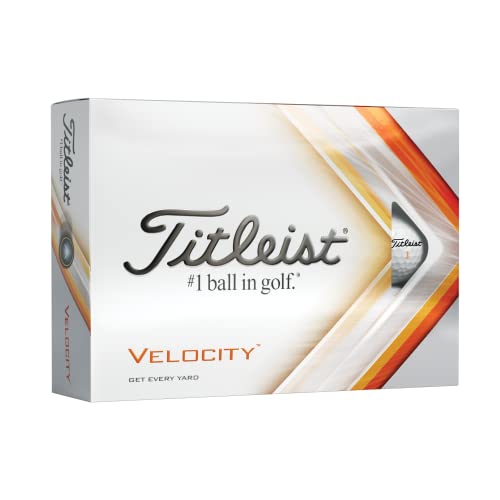
Titleist’s Velocity golf ball is a dynamic advancement from the company for golfers who want to extend their length off the tee box.
It features wonderful length, low piercing flight, and unreal shot-stopping ability once you get to the green.
Available in several colors, the Velocity offers dynamic playability for high handicappers who need more launch and carry from their golf ball.
From the fairway, it provides a tall launch with high spin for those consistent soft landings that inexperienced golfers need from their game.
Around the green, it shines by providing more spin on chip and pitch shots. With the putter, the ball doesn’t suffer like most distance golf balls. The Velocity actually adds touch and feel for high handicappers.
Great for distance, but very solid inside 100 yards, the Titleist Velocity is our choice for the best distance golf ball.
Check our full Titleist Velocity Golf Balls Review
TaylorMade TP5 Golf Balls
Best Multi-Piece Golf Balls
Check Price on Amazon
Check Price on PGA Tour Superstore
Check Price on Global Golf
Specifications
- Type: 5-piece
- Cover: Soft Cast Urethane
- Dimple Pattern: 322 Aero Dimple Design
Pros
- Lower, longer driver and long iron flight
- Penetrating flight delivers tight dispersion
- Softer cover improves feel and spin
Cons
- Doesn’t deliver the spin of the TP5x
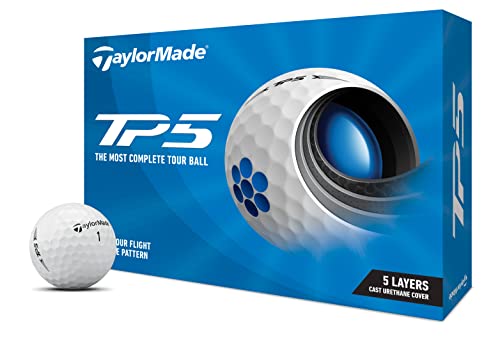
For high handicappers who don’t mind spending a few extra bucks on their golf balls, the TaylorMade TP5 is our choice for the best premium golf ball. The multi-layer ball offers first-rate feel, spin, and distance.
The TP5 reaches top speed on full swings, especially when you have the driver in hand. The low piercing flight with additional distance is a boon for high handicappers who can afford the TP5 in their budget.
The engine behind the TP5 is the Tri-Fast Core. This three-layer core offers progressive compression, maximum energy transfer, and full speed on max swing speed shots.
The advanced outer layer offers high levels of generated spin with premium groove interaction, great for around the green.
Well-built for golfers of all levels, the TaylorMade TP5 is a wonderful premium option for high handicappers.
Check our full TaylorMade TP5 Golf Ball Review
Titleist Tour Soft Golf Balls
Best High Spin Balls

Check Price on Amazon
Check Price on PGA Tour Superstore
Check Price on Global Golf
Specifications
- Type: 2-piece
- Cover: Fusablend
- Dimple Pattern: 342 Cuboctahedron Dimple Design
Pros
- Great around the greens with exceptional control
- Penetrating trajectory delivers a long, precise distance
- Impressive ball speed with driver
Cons
- Firmer feel than most soft golf balls
For golfers looking for an advanced golf ball that increases spin and feel, the Tour Soft delivers the goods.
Made with the same craftsmanship that you’ll find on the company’s ProV1, the Tour Soft offers tour-level performance with better spin and more feel.
Off the tee, the Tour Soft maintains a low penetrating flight with low spin for better accuracy. From the fairway, the ball shines with high spin and a tall trajectory for softer landings.
With a wedge, the Tour Soft offers premium greenside control. The feel and spin work in unison to offer more precise pitch and chip shots to reduce the length of putts.
Our choice for the best spin golf ball, the Titleist Tour Soft exceeds expectations with unbelievable length for a soft golf ball.
Check our full Titleist Tour Soft Golf Ball Review
Titleist TruFeel Golf Balls
Best Golf Ball for Short Game
Check Price on Amazon
Check Price on PGA Tour Superstore
Check Price on Global Golf
Specifications
- Type: 2-piece
- Cover: Surlyn
- Dimple Pattern: 376 Tetrahedral
Pros
- Low compression core boosts carry for more distance
- Ultra-soft feel delivers smooth performance around greens
- Excellent distance performance for soft golf ball
Cons
- Doesn’t produce the distance you’d expect from Titleist golf ball
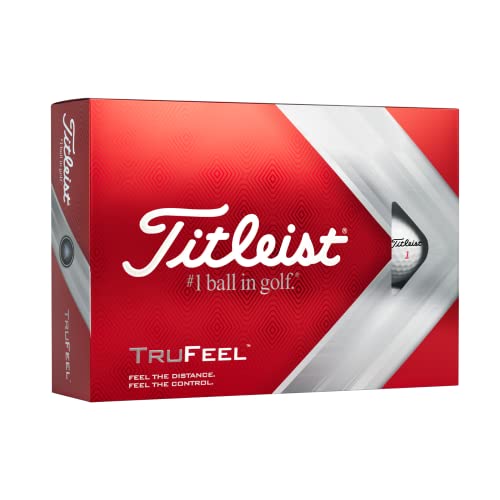
The Titleist TruFeel is our choice for the best greenside control golf ball due to its low compression core and TruFlex cover that delivers high spin.
Made with an aerodynamic cover, the TruFeel maximizes distance while not losing an ounce of feel or response.
The ball’s best feature is its exceptional greenside control. On putts, chips, and pitch shots, the ball offers incredible feel with deft touch. The high spin also helps to settle flop shots and those tricky shots from the rough and sand.
For junior golfers or those players who love to just have fun on the links, the TruFeel also comes in multiple colors, including neon orange and green.
The TruFeel is an excellent choice for high handicappers because it also presents a tremendous value with its low price point. It’s a great alternative to the Bridgestone e6.
Check our full Titleist TruFeel Golf Balls Review
Bridgestone e6 Golf Ball
Most Accurate 2-piece Balls for High Handicappers

Check Price on Amazon
Check Price on PGA Tour Superstore
Check Price on Global Golf
Specifications
- Type: 3-piece
- Cover: Urethane
- Dimple Pattern: Circular
Pros
- Excellent value with a low price point
- Superb feel for a 2-piece golf ball
- Very tight dispersion helps find more fairways off the tee box
Cons
- Doesn’t have the durability you’d expect from a 2-piece ball
For high handicappers looking to improve their scores with minimal effort, deciding to play with the Bridgestone e6 is the best choice a golfer can make.
Thanks to the E6’s high-quality construction, it delivers incredible performance at correcting the most frustrating errors in the amateur game.
High handicappers will notice that their drives are straighter and longer, their entry shots hold line against crosswinds, and their putts roll smoothly without the erratic skip common to low-grade distance balls.
The E6 has been designed to get the most from your drives, with forgiveness that reduces side spin and keeps the golf balls on target.
A redesigned, oversized gradational compression core keeps the backspin and side-spin in check for improved drag and optimum ball flight.
What this gradational core does for a high-handicap golfer is help reduce the damage most amateurs cause with poor swings.
By damage, we are referring to the excessive side-spin that produces those score-killing slices that put the golf balls in trouble. If you clip the ball with an open face, the e6 dampens the rotational spin, helping it fight to stay in the short grass.
From the fairway, the E6’s core is coupled with a soft, seamless Surlyn cover.
The enhanced technology Bridgestone has put into revamping the E6 across its generations, moving away from its older 3-piece iteration back to a perfected, streamlined 2-piece blend, gives the balls a highly consistent flight with predictable distance upon entering the green.
Watching the ball land on the green on mid-iron shots proves that while the E6 doesn’t generate tour-level backspin, its high-launching trajectory provides a steep angle of descent to stop the ball effectively.
Its cover features Bridgestone’s advanced Seamless Dimple design. The dimples give the golf balls a chance to fight the impact that the surrounding air has on the ball as it travels from the fairway to the green.
This seamless layout imparts a barrier shield to the golf balls that cuts through harsh crosswinds, keeping high handicappers on line instead of drifting into greenside bunkers.
When on the green, no other budget-friendly 2-piece golf ball provides the soft feel and predictable roll of the e6.
When most high handicappers take a putt, they are using substandard distance golf balls that place their putts at significant risk of slipping offline due to the rock-hard, inferior materials used to make them.
But the E6’s formulation is a dream to use on the green because it eliminates the “clicky” feedback and severe skidding that occur with most cheap 2-piece balls.
Instead, the soft core allows the ball to get rolling forward more quickly off the putter’s face.
By doing that, the golf balls roll true and stay online, avoiding the micro-bounces that ruin distance control, paving the way for fewer three-putts and lower scores.
For some advanced golfers, the e6 is too straight, lacks high-level backspin, and rolls out too much on tight chips.
While that opinion has validity for low handicappers, the benefits of playing with the e6 outweigh those accusations for the recreational player.
If you struggle with a slice and want to hit the fairway more often, it is just a terrific ball.
It may not bite like a premium tour ball. But for the amateur looking to make significant strides in accuracy quickly, they will not find a better 2-piece golf ball than the Bridgestone e6.
Check our full Bridgestone e6 Golf Ball Review
Volvik Vivid Golf Balls
Best Color Golf Ball for High Handicap Golfer

Check Price on Amazon
Check Price on PGA Tour Superstore
Specifications
- Type: 3-piece
- Cover: Matte Finish SF Ionomer (Surlyn)
- Dimple Pattern: 322 Seamless
Pros
- Unmatched high-contrast visual tracking
- Fun to play with impressive performance
- Low compression performance for high handicappers
Cons
- Firm “clicky” feel on short-game shots
- Reduced greenside grab compared to premium urethane
For high handicappers looking to improve their scores with minimal effort, deciding to play with the Volvik Vivid is the best choice a golfer can make.
Thanks to Vivid’s high-quality construction, it delivers incredible performance in tracking, locating, and keeping your ball in play.
High handicappers will notice that their drives are straighter and longer, their shots are instantly visible against any backdrop, and their putts roll smoothly along clean alignment guides without the frustrating visual glare that kills accuracy.
The Vivid has been designed to get the most from your drives, with forgiveness that reduces side spin and keeps the golf balls on target.
A redesigned Nano-Bi Energy Core keeps the backspin and side-spin in check for improved drag and optimum ball flight.
What this unique core does for a high handicap golfer is that it helps reduce the damage that most amateurs cause with poor swings.
By damage, we are referring to the excessive side-spin that produces those score-killing slices that put the golf balls in trouble.
Off the tee, it yields a remarkably low spin rate of around 1,800 rpm, helping straighten offline tee shots. From the fairway, the Vivid’s core is coupled with an ionomer mantle layer.
The enhanced technology Volvik uses to build the Vivid as a true 3-piece ball, while most colored golf balls are cheap, 2-piece-construction models, gives the balls a highly consistent flight with unmatched control at impact.
Watching the golf balls take flight over the fairway proves that the patented SF Matte cover completely eliminates sun glare, allowing your eyes to track the ball effortlessly through the air.
Its cover is imprinted with a unique 322-dimple design. The dimples give the golf balls a chance to fight the impact that the surrounding air has on the ball as it travels from the fairway to the green.
With the matte finish, the dimples impart a barrier shield to the golf balls that cuts through the wind while the 3-piece architecture maintains mid-iron ball speeds for players with moderate swing speeds (70 to 90 mph).
When on the green, no other colored golf ball provides the sharp visual alignment and reliable roll of the Vivid. When most high handicappers take a putt, they are using standard white or gloss golf balls that offer no help in visualization.
But the Vivid’s V-Focus 360-degree alignment system is a dream to use on the green because it reduces the mental guesswork of aiming your putter face.
Instead, the ball gets rolling forward smoothly off the putter’s face.
Because it features a mid-range 75 to 85 compression, it gives off a distinct, confident “click” rather than a mushy feel, allowing high handicappers to develop consistent distance control on long lag putts so the golf balls roll true and stay online for fewer three-putts.
For some golfers, the Volvik Vivid is too firm off the face, lacks the stopping power of urethane, and can feel rigid on chip shots.
While that opinion has some validity for scratch players, the benefits of playing with the Vivid outweigh those accusations for the recreational player.
If you struggle to track your ball in the sky or lose multiple golf balls in the rough each round, it is just a terrific ball.
It may be firmer around the greens, but for the amateur looking to make significant strides in their visibility and scores quickly, they will not find better color golf balls than the Volvik Vivid.
How We Tested the Golf Balls
When we test for the best golf balls for high handicappers, we look for golf balls that deliver distance, accuracy, and low driver spin.
Since most multi-layer golf balls are too expensive for casual golfers with high handicaps, we tend to focus more on two-piece golf balls that deliver length off the tee with a softness around the greens.
When first receiving a golf ball, we consider the dimple design, the compression rating, and the number of layers each ball contains when searching for golf balls that work best for high handicappers.
Since most high handicappers have slow swing speeds, we like a low-compression ball that can produce distance even if the clubhead isn’t traveling at PGA Tour-level velocity.
Once we get a scene of the golf ball’s particulars, we take them to a controlled indoor environment with a launch monitor to gather data on the ball’s performance.
We note such factors as average distance, ball speed, spin rate, and other essential data points for a golf ball. Ultimately, we are looking for a specific performance that will help the golfers who need it the most.
After cataloging our data indoors, it’s time to take the golf ball out to the range to see how it responds to real-world conditions. We note how the ball plays in the wind and various humidity conditions.
We wrap up our testing with some short gameplay to see how the ball responds to chips, pitches, and long-distance putting.
How to Choose the Best Golf Ball for High Handicap
Distance
A new golf ball can provide exceptional distance to a high handicapper’s game. A solid two-piece golf ball offers a length advantage when compared to soft golf balls that worry more about spin and control.
Straighter shots
A golf ball with an advanced dimple system and low spin off the tee box can provide straighter shots. Typically, a ball that advertises a softer cover will also improve accuracy through its reduced distance.
Spin & feel
A soft golf ball will have a thinner cover that increases spin and improves feel over the harder two-piece golf balls that increase distance. It helps high handicappers find better greenside control as well.
Durability
Two-piece golf balls typically have a thicker outer layer so that they remain durable over a longer period of time.
Since value is the primary concern with a high handicap golfer, keeping the ball in top condition is very important.
Construction
Most two-piece golf balls have an outer layer and inner core, making their construction very simple, but very important to overall production.
A multi-piece golf ball offers more spin, and better control, but it’s cost may keep it out of the range of a high handicapper.
Golf ball cover
The cover of a golf ball can either be thin, allowing for more spin and feel, or thicker, for more durability.
The cover’s quality is responsible for high spin entering the green, greenside control with short game shots, and low spin off the tee box when hitting the driver.
Dimples
A dimple system aids the flight of the ball by reducing the effects of the wind on the golf ball’s surface. The reason dimples are so important is that they allow the ball to travel extended distances with accuracy.
Price
Since most high handicappers prefer playing cheaper golf balls until their game improves, manufacturers offer many low price brands. Each of these value golf balls provides either excellent length or high spin.
Budget
Since golf is an expensive sport, sticking to a pre-decided budget helps leave money for other necessities, like better golf clubs and lessons.
A budget golf ball can provide terrific response and reliability, making it ideal for golfers who prefer value over performance.
Frequently Asked Questions

What golf ball is most forgiving?
The Callaway Supersoft is the top pick for golfers struggling with consistency. Forgiveness in ball design is all about low compression and materials.
The Supersoft comes in with a HyperElastic SoftFast Core, featuring an ultra-low 38 compression rating.
When a high handicapper swings this ball and doesn’t quite hit the sweet spot, the soft core deforms under moderate swing speeds. This keeps energy transfer going and dampens harsh vibrations from off-center hits.
The hybrid cover also reduces drag, so your mishits still go high and stay on line.
Instead of losing a bunch of distance or veering off course when you don’t quite hit it right, this design absorbs your mechanical errors and keeps the ball in play.
Is Callaway Supersoft better than Titleist Pro V1?
The Callaway Supersoft is way better than the Titleist Pro V1 for the average golfer, while the Pro V1 still has its advantages for those high-speed scratch players.
People often assume that expensive tour golf balls are the way to go for better scores, but the physics behind a three-piece urethane ball like the Pro V1 just can’t be activated by slower-swinging amateurs.
When you’re swinging slower than 90 mph, you can’t get the inner layers to compress properly, and that means you’ll lose up to 15 yards off the tee and end up with more sidespin.
The Callaway Supersoft is a two-piece ionomer construction designed specifically for golfers like you and me. It eliminates too much driver spin, keeps the ball flying straighter, and will actually save you money.
What is the easiest golf ball to hit straight?
The Maxfli StraightFli is the golf ball that will make you happy when it comes to hitting straight shots. This is because it’s got a unique dimple pattern designed to reduce the aerodynamic drift that causes those hooks and slices.
To keep the ball in the fairway, you need to reduce the side spin that makes a mess. The StraightFli gets around this by using a special dimple pattern that keeps the ball stable right after it leaves the clubface.
Plus, its soft gradational core is wrapped in a smooth ionomer blend that causes less spin-off than those fancy urethane options.
When your swing path is a little off at impact, this ball resists grabbing the air, and all that typical 30-yard slice turns into a manageable fade that usually lands safely in the short grass.
Do golf balls make a difference for high handicappers?
Golf balls make a huge difference for high handicappers because the design directly affects how your ball flies.
A lot of high handicappers think their swings are too inconsistent for a ball to matter, so they just play random golf balls they find. That’s just silly.
Changing between a hard-distance ball and a soft tour ball changes your launch conditions with every single shot.
High handicappers using a low-compression Surlyn-covered ball will find the fairway a lot more often than the same golfer swinging a high-compression tour ball.
If you pick the right ball, you can get predictable distance gaps and less side spin. And that’s going to turn gear selection into a quick and easy way to drop 3 to 4 strokes off your current handicap.