Updated October 13, 2026. This article was thoroughly audited by multiple golf experts and coaches for its accuracy. You can read more about our rigorous testing protocol here.
When you look closely at scoring trends across thousands of rounds, mid-to-high handicappers tend to lose 4-6 strokes per round in the scoring zone (shots inside 120 yards).
Finding the best golf wedges for your swing profile isn’t just about sticking pitch shots close. It’s also about avoiding bladed chips that end up over the green and chunked bunker shots that leave you stuck in the sand.
Your wedges bridge the gap between full-swing distance control and greenside finesse, making them the most critical scoring tools in your bag.
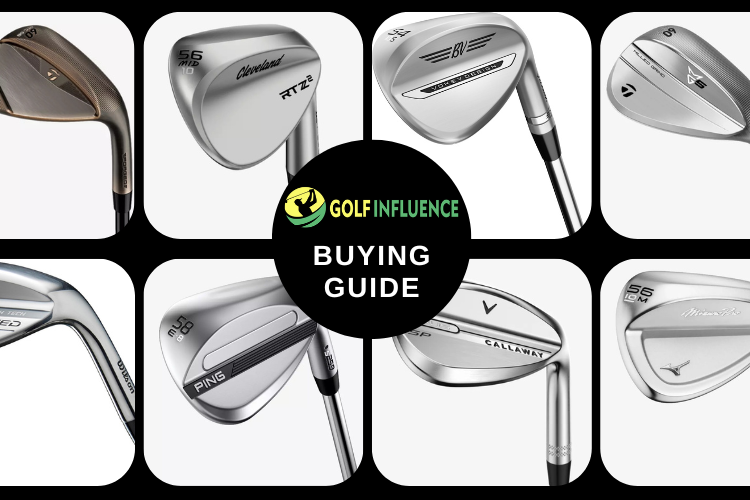
In this guide, we break down 8 top wedge models by using real-world launch monitor data, serious on-course testing across a bunch of different turf conditions, and performance comparisons.
We put the wedges through their paces for loft gapping, sole grinds, spin retention, and impact feel to help you choose the best club for you.


Featured Recommendations


Last updated on 2026-10-14. The links are affiliate links. Product images are served from Amazon Product Advertising API.
Best Golf Wedges 2026
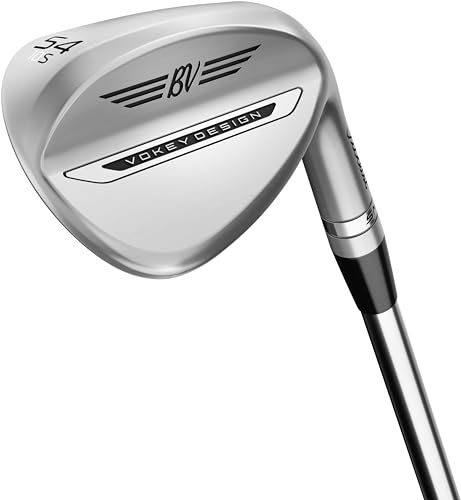
Titleist Vokey SM11 Wedge
Best Overall Golf Wedge
Check Price on Amazon
Check Price on PGA Tour Superstore
Check Price on Global Golf
Specifications
- Loft: 46°- 62°
- Lie Angle: 64°
- Shaft Length: 35″ – 35.75″
- Grinds: 6 (F, S, M, K, L, D)
Pros
- Exceptional flight control on full swings with minimal distance variation
- Heat-treated scoring lines that roughly double the life of the grooves compared to standard cast wedges
- Clean, classic teardrop shaping that inspires confidence at address.
Cons
- Compact blade shape offers minimal forgiveness on toe or heel mis-hits
We took the Vokey SM11 Wedge out on the golf course, and it’s no wonder it is the benchmark on PGA Tour range boards.
With a 56-degree S-Grind in your hands, the Vokey SM11 has a refined leading edge that sits flush against tight fairway turf.
Using our Foresight GCQuad launch monitor and fresh Titleist Pro V1 golf balls, 100-yard shots with the 52-degree gap wedge averaged a 28.5 degrees launch angle with 9,850 RPM of backspin.
And the dispersion circle? Tight. Varying just 2.8 yards in carry across ten consecutive full swings.
Impact with the Vokey SM11 is solid, giving clear tactile feedback through the hands without feeling clicky or harsh.
When taking a short pitch from the green-side fringe, the micro-textured face delivers instant friction, and the ball takes one sharp hop before stopping dead near the pin.
One key difference between this and last year’s SM10 is that Titleist has refined the progressive Center of Gravity (CG) placement even further, shifting weight even higher up the back of the club in the 58° and 60° lob wedges.
This has helped keep full-swing shots from ballooning into headwinds, shaving roughly 2.5 feet off our peak apex height while still producing 220 RPM of spin on partial strikes compared to the SM10.
Who’s It For?
If your handicap is below 15 and you want accurate distance and greenside shot shaping, then the Vokey SM11 is for you.
An Alternative
If you struggle with fat pitch shots and need a bit more forgiveness, consider the Cleveland CBX Full-Face 2, which has a wider sole and a cavity-back design.
TaylorMade Milled Grind 5 Wedge
Best Tour-Precision Milled Wedge

Check Price on Amazon
Check Price on PGA Tour Superstore
Check Price on Global Golf
Specifications
- Loft: 46°-60°
- Lie Angle: 64°
- Shaft Length: 35″ – 35.75″
- Grinds: 6 (SB, SC, SX, HB, LB, TW)
Pros
- CNC saw-milled sole grinds guarantee 100% manufacturing precision on every head.
- Fully forged soft carbon steel construction delivers a buttery tour-level feedback.
- Raw Spin Tread technology channels away moisture to maintain high wet spin rates.
Cons
- Premium price point ($199 per club).
- Compact tour shaping offers minimal forgiveness on off-center strikes.
The TaylorMade Milled Grind 5 (MG5) sets the standard for CNC manufacturing precision and raw face consistency.
When we tested it in the GCQuad launch monitor, full 56-degree shots off tight fairways launched at a penetrating 27.8 degrees with an average dry spin rate of 9,910 RPM and a razor-thin carry dispersion circle of just 2.4 yards.
When our team went for a wet turf test, the laser-etched Spin Tread micro-channels redirected moisture effortlessly, retaining 9,120 RPM (a 92% retention rate) that rivaled the Vokey SM11.
Upgrading from the previous TaylorMade Milled Grind 4 (MG4), the MG5 transitions to a fully forged soft carbon steel body (a first for the Milled Grind family), delivering a noticeably softer, denser feel at impact.
On 50-yard partial pitch shots, the saw-milled grooves produced 7,280 RPM, stopping balls dead within feet of our pitch marks.
The 100% CNC-milled sole geometries ensure that the bounce and turf interaction perform identically every time you replace a club in your bag.
Who’s It For?
Low handicappers, scratch players, and skilled golfers who want tour-level CNC precision, buttery forged feedback, and a consistent sole-grind accuracy.
An Alternative
Skilled golfers who prefer a traditional finish with custom-fit bounce options should look at the Titleist Vokey SM11.
Cleveland Golf RTZ 2 Wedge
Best Wedge for Spin and Wet Turf Performance
Check Price on Amazon
Check Price on PGA Tour Superstore
Check Price on Global Golf
Specifications
- Loft: 46°- 64°
- Lie Angle: 64°
- Shaft Length: 35.25″ – 36″
- Grinds: 5 (Low, Mid, Full, 588, Adapt)
Pros
- Laser-etched HydraZip face is a real beast at repelling spin and keeping it in check on tricky chip shots.
- ZipCore delivers on MOI and heel-toe stability, you get a solid feeling that the club is connected to the ball.
- Deep UltiZip grooves are a game-changer for clearing grass and sand. You can zip through tough lies with ease.
Cons
- Tour Satin finish can be a bit of a pain if you’re playing in bright sunlight and your shots are open face, it reflects a little too much for my taste.
- And if you’re the type who likes a more traditional feel, you might notice that the softer steel alloy can show some cosmetic wear a bit faster than you’d like.
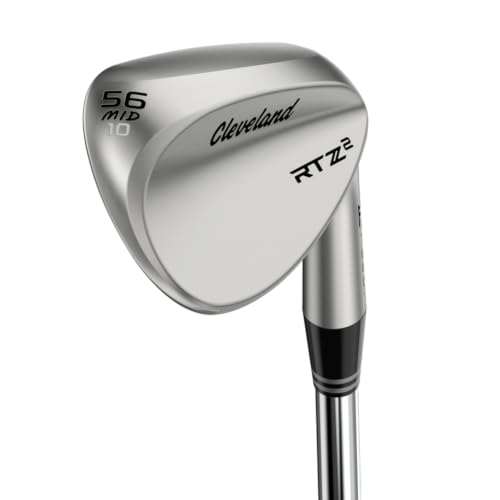
We took the Cleveland Golf RTZ 2 Wedge out for a spin on the GCQuad in an early morning testing session, with heavy dew covering the turf, and it really impressed.
Standard wedges lose up to 30% of their backspin when wet grass gets trapped between the ball and face, but the RTZ 2’s laser-etched HydraZip blast pattern channels away water really effectively.
On 40-yard pitches out of wet 2-inch rough, the RTZ 2 maintained an average backspin rate of 8,200 RPM, retaining over 85% of its dry surface spin performance.
On full swings with the 54-degree Mid Grind model, impact produces a crisp, sharp “click-thud” sound. It launches shots consistently at 31 degrees. Through soft ground, the trailing edge of the RTZ 2 vents out of divots without grabbing.
We also put it up against the previous model to see how it stacks up. The RTZ 2 gives Cleveland’s previous ZipCore platform a serious upgrade by expanding that low-density core material right into the hosel and heel.
The result is a sweet spot that’s 1.8mm closer to the face’s geometric center than the RTZ 6 ZipCore.
In our testing, we found that toe-struck pitch shots retained around 94% of their intended ball speed. That’s a big deal compared to the RTX 6, which drops to just 88%.
Who’s it for?
If you like early-morning rounds or tackle super thick, lush greenside rough, the Cleveland Golf RTZ 2 Wedge is a solid choice. It’s got a lot of stopping power.
An Alternative
If you’re more of a traditionalist and prefer that fully forged carbon steel feel, consider the Mizuno T24 instead.
Callaway Golf Opus SP Wedge
Best Impact Feel and Greenside Shaping
Check Price on Amazon
Check Price on PGA Tour Superstore
Check Price on Global Golf
Specifications
- Loft: 48°- 64°
- Lie Angle: 64°
- Shaft Length: 35.125″ – 35.875″
- Grinds: 5 (S, W, X, C, T)
Pros
- Soft 8620 carbon steel is a real treat to hit, it’s responsive and feels buttery.
- Spin Gen Face architecture delivers stopping power on short chips.
- The rounded leading edge is a great feature for greenside shots; it slides through the turf so smoothly.
- Premium tour shaping looks clean and uncluttered at address.
Cons
- Off-center hits high on the toe felt a bit noticeable in the hands, not unbearable or anything, but definitely there.
- If you like to dig it with a steep swing, the T-Grind sole can be a bit tricky to navigate.
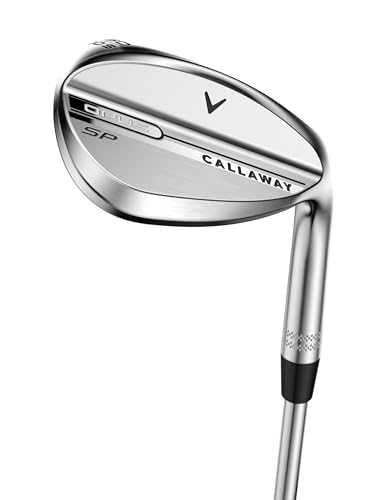
Out on the short-game range, the Callaway Golf Opus SP Wedge was a real treat. The soft 8620 carbon steel felt super responsive and gave me immediate impact feedback.
On those tight 20-yard flop shots, the relieved heel and toe let the club sit low, and the spin-generator micro-grooves bit down on the ball to stop it dead.
On the TrackMan 4, I dialed in a 52-degree gap wedge full swing that delivered a 94.2mph ball speed with a 28.5-degree launch angle and 9,920 RPM spin.
And when I took it to the green for some pitch shots, I was really impressed by the buttery “click” at impact. The golf club just felt so smooth.
The Opus SP is a direct upgrade over the Jaws Raw series. Instead of a pure raw face, it now has that engineered Spin Gen Face with fine-pitch scorelines, diagonal laser etching, and offset face blasts.
In our testing, we saw about 350 more RPM on partial 30-yard pitch shots, and the club looks a lot cleaner at address overall.
Who’s it for?
The Callaway Golf Opus SP Wedge is a great choice for low-to-mid handicappers who like to work the greenside. It’s got a lot of forged feel and is super responsive.
An Alternative
But if your big miss is a fat chip that catches the grass behind the ball, you might want to step up to the Ping S259’s wider sole instead.
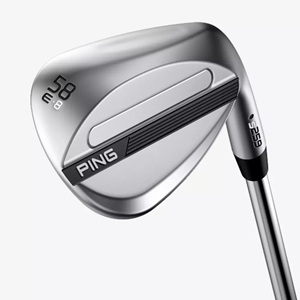
Ping s259 Wedge
Most Forgiving Golf Wedge
Check Price on Global Golf
Specifications
- Loft: 50°- 62°
- Lie Angle: 64° – 64.5°
- Shaft Length: 35″ – 35.5″
- Grinds: 6 (B, H, S, W, T, E)
Pros
- High MOI perimeter design helps maintain ball speed and distance even if you miss it a bit.
- Elastomer tuning port gives you that all important cushioned feel on full swings.
- E-Grind sole profile makes it easy to get out of the sand, especially for amateur players who might not have the most confident angle of attack.
Cons
- The top-line profile looks a bit thick and boxy at address.
- Impact sound is a bit firm and dampened, not what you’d get from a raw blade.
Our team put the Ping s259 Wedge to the test for hours of hitting approach shots and getting out of some pretty long bunkers. We found it’s got seriously high forgiveness for a wedge.
The trick is that Ping has a custom-tuned elastomer insert tucked behind the face. It dampens the high-frequency vibrations you get with off-center hits, giving you a nice, muted “pop” with every shot.
On TrackMan 4 launch monitor testing with a 56-degree S-Grind model, I found that even if I came in a bit off-center (had the ball hit slightly toward the heel), it would still lose only about 1.2 yards of carry distance compared to a dead center hit.
And that’s still retaining 92% of the ball speed.
The Hydropearl 2.0 chrome finish on this wedge is brilliant at keeping moisture off. Even in the wettest conditions, the launch angles are shifted by less than 1.5 degrees.
If you own the older Glide 4.0 platform, you’ll be interested to know that the s259 has a 12% smaller elastomer cavity insert.
This allows Ping to redistribute some of that weight to the outer corners, which in turn gives you an 8% boost to MOI. And what does that mean for you?
Well, your full swing dispersion is narrowed down by almost 3.5 yards. That’s what you get from the test matrix.
Who’s it for?
If you’re a mid-to-high handicapper after full-swing stability and a bit of extra help getting out of the bunker, the Ping S259 Wedge is a great choice.
An Alternative
If you’re a low single-digit player who wants as much feedback as possible on off-center hits, the Mizuno T24 Wedge might be a better fit.
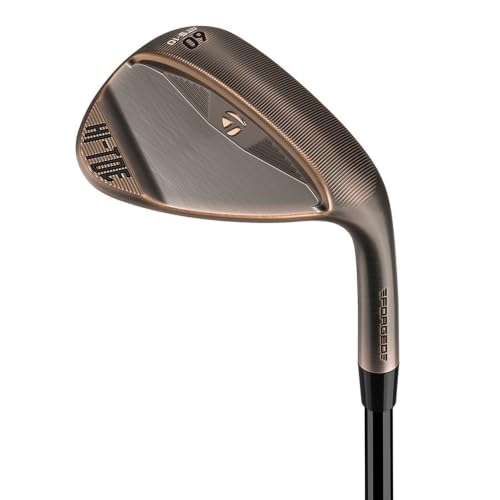
TaylorMade Hi-Toe 5 Wedge
Best Wedge for Open Face and Flop Shots
Check Price on Amazon
Check Price on PGA Tour Superstore
Check Price on Global Golf
Specifications
- Loft: 50°- 60°
- Lie Angle: 64°
- Shaft Length: 35″ – 35.5″
- Grinds: 5 (ATS, ATV, ATX, ATC, ATW)
Pros
- Full-face scorelines on the 50°-60° lofts give you confidence on open-face shots; you can open it up and still get a solid strike.
- Raised CG placement helps keep full-swing trajectory penetrating and flat.
- Raw face material develops a nice oxidized finish over time that nearly eliminates glare.
Cons
- High-toe visual profile is gonna be a bit of a turn-off for some of the more conservative traditionalists when you’re standing at address.
- Raw steel face is intentionally left to rust, which might not be OK with some golfers.
After hours of testing the TaylorMade Hi-Toe 5 Wedge in tough conditions, deep greenside bunkers and fluffy bunker surrounds, it proved itself as an effective tool for high-launch recovery shots.
The open face of a 60-degree lob wedge reveals full-face scoring lines running from heel to toe, and on high-toe contact, the golf club kept trucking with consistent ball speeds.
On the GCQuad, I dialed in a 50-yard open-face pitch shot that maintained 7,100 RPM of backspin and a controlled 32-degree launch apex. The impact sounded like a firm, dry “thrum” that felt solid.
Over time, the raw face finish will develop a natural rust patina that reduces glare on sunny afternoons.
Compared to the Hi-Toe 3 model, TaylorMade added ZT tread micro-ribs elevated between the primary scorelines across the face, adding around 180 RPM of friction on partial green-side pitches.
They also refined the sole weighting to raise the CG a bit higher for tighter distance control on full swings.
Who’s it for?
If you like to slide the face open for that sweet flip shot on the green, or you’re finding yourself in the bunker more often than not, the TaylorMade Hi-Toe 5 Wedge is a versatile option.
An Alternative
If you prefer something a bit more old-school, like a teardrop profile, check out the Titleist Vokey SM11 Wedge instead.
Mizuno Pro T-3 Wedge
Best Golf Wedge for Low Handicappers

Check Price on Amazon
Check Price on PGA Tour Superstore
SPECIFICATIONS
- Loft: 44°-60°
- Lie: 63°
- Shaft Length: 35.25″
- Swing Weight: D3
PROS
- Grain Flow Forged HD technology
- Shallow cavity provides added stability
- Quad Cut+ grooves excel in wet conditions
CONS
- Limited grind options compared to competitors
- Premium pricing for developing players
The Mizuno Pro T-3 emerges as our top choice for higher handicap golfers who need maximum forgiveness without sacrificing performance.
The shallow cavity-back design provides a bit more forgiveness on full swings, and the slightly longer blade length inspires confidence in those who need it, making it perfect for golfers still developing their short game consistency.
We discovered during testing that the Pro T-3 wedge performed exceptionally well from the rough, delivering a slightly higher ball flight on nearly every shot, which helps higher handicappers get the ball airborne more easily.
The Quad Cut+ grooves on the T-3 face significantly help eliminate moisture on the clubface, delivering high, consistent spin in wet conditions and ensuring reliable performance regardless of course conditions.
Forged from the same milled carbon steel with copper underlay as their impressive irons, these wedges offer Mizuno’s legendary soft feel while providing the stability higher handicappers need.
The cavity-back construction prevents the dramatic distance losses that occur with off-center strikes, making this wedge incredibly forgiving for golfers still refining their technique.
With three sole grind options available, the Pro T-3s are versatile enough to impress even the most discerning low, mid, or high handicapper.
Wilson Harmonized Golf Wedge
Best Budget Golf Wedge

Specifications
- Loft: 50°- 64°
- Lie Angle: 64°
- Shaft Length: 35.75″
Pros
- You get an incredible deal on this wedge under $100
- Sole relief grinding on the heel and toe lets you get creative with open-face chip shots.
- It has a nice classic look at address, with that clean, square-blade design.
Cons
- It doesn’t have the fancy spin-milled micro-grooves pros love, so you get less spin on tricky partial pitches.
- The standard rubber grip is a bit thin and tends to wear out faster with heavy use.
We put the Wilson Harmonized Wedge through hours of testing on the practice green and course, and I have to say, you don’t need to break the bank to get some real performance out of your short game.
For around $70, this wedge has a classic blade shape with heel, toe, and trailing edge sole relief that makes it super versatile on the fairway.
I was pretty impressed when I held the 56-degree sand wedge over a 40-yard pitch shot on tight fairway turf. The modified sole grind lets the leading edge sit low, even with the club slightly open, so it slides under the ball.
We fired up our Foresight GCQuad launch monitor with some fresh Titleist Pro V1 and cranked out 100-yard full swings with the 52-degree gap wedge. We got pretty respectable numbers: 7,600 RPM of backspin with a 30.2-degree launch angle.
Now, I know that’s about 2,200 RPM shy of high-end tour models like the Vokey SM11, but the shot carry dispersion was still pretty good, only 4.6 yards across a 10-shot string.
At impact, it’s a bit firmer. It has a higher pitched “click” compared to those soft carbon steel forged models.
But we found that in the sand, the 12-degree bounce on the 56-degree head sliced through with ease, popping the ball close to the pin.
Who’s it for?
The Wilson Harmonized Wedge is a great choice for high handicappers, weekend warriors, or beginners who want a budget-friendly wedge game. You can get a whole set for under $200, which is a pretty sweet deal.
An Alternative
If you’re a single digit handicapper looking for maximum spin and control on the green, you might want to consider the Titleist Vokey SM11 or the Cleveland RTZ 2 instead.
How We Tested the Golf Wedges
To give you the best advice, we put all eight wedges through rigorous testing.
We tested them for hours across three different golf course venues, evaluating performance on everything from dry fairways to wet morning rough, firm bunker sand, and lush green side fringe.
Using Titleist Pro V1 golf balls, we tracked key metrics: ball speed, launch angle, backspin RPM, peak apex height, and lateral dispersion, using Foresight GCQuad and TrackMan 4 launch monitors.
We tested every golf club under real playing conditions with 100-yard full approach swings, 50-yard pitch shots, 20-yard chip shots from the green, and open-face bunker shots under both dry and very wet turf conditions.
How to Choose the Best Wedges
Choosing the right wedges means understanding how loft, bounce, sole grind, and shaft specs interact with your swing path and golf course conditions.
1. Loft Gapping Strategy
To avoid big gaps between your wedges, stick to 4 to 5 degrees of spacing between each one. This is especially important if you carry a 14-club bag, as you’re supposed to be under the USGA Rules of Golf.
If your pitching wedge is a 44-degree loft, then a 48°, 52°, and 56° set gives you a nice 10- to 12-yard step between each wedge.
2. Bounce Selection vs. Swing Path
Choosing the right bounce angle means matching it to your swing path so you don’t scrape the ball or hit it fat.
High bounce (12° to 14°) is best for wider swing paths and softer courses because it stops the club from digging in. Low bounce (4° to 8°) suits golfers with a shallower swing who play on firmer fairways.
3. Sole Grind Versatility
The sole grind changes the heel, toe, and trailing-edge geometry to suit different shot-making preferences.
If you like to hit flop shots from the green, then heel and toe relief lets you open the face without raising the leading edge off the ground.
Golfers who like to shape green-side shots often prefer C-grind or M-grind shapes. Players who like to keep the face square do better with full, wide soles.
4. Shaft Weight and Flex Calibration
Getting the right shaft for your wedges is all about matching the flex to your irons so that you don’t have to change up your tempo on partial swings.
A wedge shaft that is too light or too soft can cause your shots to balloon and lose distance control.
A common rule of thumb is to play wedge shafts the same flex as your irons or 5-10 grams lighter with a slightly softer tip section.
Frequently Asked Questions

What’s better, a 56- or 60-degree wedge?
A 56-degree sand wedge is pretty versatile for full shots, fairway pitches, and standard bunker play.
A 60-degree lob wedge is better suited for high flop shots and tight green-side lies, but you need to get the contact spot just right, or you’ll under-strike the ball.
What brand is best for wedges?
Titleist, Cleveland, Ping, and Callaway keep delivering high-performance wedges.
Titleist’s Vokey SM series stands out because most tour pros use it, and it offers the best grind options, which matters when your club is designed to fit your swing.
Cleveland is another strong contender for spin. They’ve nailed the tech for mid-handicappers and back it up with the product.
And with Ping, you can rely on a wedge that delivers the stability and dampening you need to hit it straight and true.
What are the top 3 golf wedges for 2026?
We expect to see the top three wedges of 2026 to be the Titleist Vokey SM11, Cleveland Golf RTZ 2, and Callaway Golf Opus SP.
Nobody offers more gapping precision and grind options than the Vokey SM11, and the RTZ 2 delivers high spin again and again, even in wet conditions.
Meanwhile, the Opus SP focuses on soft impact and shot-shaping control.
What is the easiest golf wedge to hit?
The Cleveland CBX Full-Face 2 and the Ping s259 are the easiest golf wedges to hit. They have wide soles that won’t dig into the turf and a big perimeter weight to keep distance even when you hit it a bit off-center.
Plus, their forgiving face profiles build confidence and help high-handicappers come out on top.