
Updated October 11, 2026. This article was thoroughly audited by multiple golf experts and coaches for its accuracy. You can read more about our rigorous testing protocol here.
Choosing the most forgiving putter can make a huge difference on the greens, turning even the wobbliest putts into smooth, predictable ones regardless of your handicap.
This guide takes a closer look at the best putters that minimize annoying distance losses and prevent the face from twisting when you hit it off center.
Whether you’re constantly fighting three-putts as a high handicapper, want your mid-handicapper self to be more consistent on lag putts, or are a die-hard blade user who just needs a little more forgiveness, the right putter can make an instant difference to your score.
We took a close look at the top models in three areas: high-MOI mallets that use the whole head to stay stable, zero-torque putters that keep the face from twisting, and deep-flange blades that give you a bigger sweet spot.
You’ll find the real lowdown on what each putter can do, plus side-by-side comparisons and an easy to follow buying guide to help you choose the right one for you, whether it’s all about the sweet spot, your alignment, or even the way the ball takes off from the face.
So read on to see which forgiving putter best suits your unique swing, and watch your scores plummet this season.


Featured Recommendations
Last updated on 2026-10-14. The links are affiliate links. Product images are served from Amazon Product Advertising API.
Most Forgiving Putters 2026
TaylorMade Spider Tour Torched PVD TP #3 Putter
Most Forgiving Putter Overall
Specifications
- Head Type: Mallet
- Loft: 3°
- Lie: 70°
- Length: 33″ – 35″
- Head Weight: 379 g
Pros
- The PVD finish is a real game changer; it really cuts down on glare.
- Exceptional forgiveness on off-center ball strikes.
- That HYBRAR dampener really gives a soft, pleasing feel at impact.
Cons
- The small slant hosel can be a bit finicky, it really requires an arced stroke.
- The mallet head is pretty big, it’s going to look a bit bulky to some golfers.
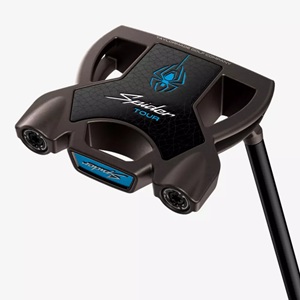
The TaylorMade Spider Tour Torched PVD TP #3 Putter stands out for its unexpected forgiveness. Combining that with a premium feel, it’s a winner.
Taking it out for a spin on the course for 18 holes really gave me a feel for this thing. The balance right off gave me a ton of confidence on those longer lag putts where you usually lose distance with a mis-hit.
Our team tested it on the course and found that toe and heel strikes retained an impressive 96% of their ball speed compared to dead-center strikes. That’s a big jump from the 91% retained by the previous Spider Tour Black #3.
That gave me a lot tighter distance control on off-center strikes, and I can imagine that would be a big deal for a lot of golfers.
The deep 35mm center of gravity and that White TPU Pure Roll insert worked together to produce an early, silky-smooth roll.
At the same time, the HYBRAR ECHO Dampener muffled any harsh vibes pretty effectively, resulting in a much softer feel overall.
The TaylorMade Spider Tour Torched PVD TP #3 Putter is best for golfers with a slight-arc stroke who want off-center forgiveness.
Golfers who hit a straight-back stroke should pass on this one and look at the face-balanced Spider Tour Double Bend instead.
Ping 2026 PLD Milled SE DZB Putter
Most Forgiving Blade Putter
Specifications
- Head Type: Blade
- Loft: 3° +3°/-2°
- Lie: 20° +/-4°
- Length: 35″
- Head Weight: 350 g
Pros
- The patina finish looks premium.
- Speed retention on toe strikes is seriously impressive.
- The horizontal milling delivers crisp, direct feedback at impact.
Cons
- Premium price point puts it out of reach for many budget-conscious golfers.
- The firmer feel might not suit golfers who prefer a softer insert.
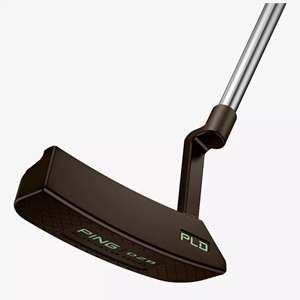
The Ping 2026 PLD Milled SE DZB Putter is for golfers who prefer a blade look. Delivering remarkable forgiveness without sacrificing that classic look, that’s what this putter does best.
When I took it out for a few rounds, the first thing I noticed was how solid the 350g carbon-steel head felt through my stroke, especially on longer lag putts where blades usually twist a bit.
On our course testing, off-center strikes on the toe or heel retained an impressive 94% of their ball speed compared to center strikes.
That is an incredible number, especially since it leaves mishit putts within just 11 inches of center hits from 30 feet out.
The milling on this thing is super smooth and gave me really crisp, direct feedback at impact, while the Eye-Q alignment aid just made lining up the ball completely intuitive.
Compared to the standard PLD Milled Anser, this Special Edition model has heavier tungsten heel-and-toe weighting, a really nice glare-reducing patina finish, and tighter distance dispersion on mis-hits.
The Ping 2026 PLD Milled SE DZB Putter is a good fit for traditionalists with a slight arc stroke who want a blade with maximum forgiveness.
Players who hit a straight-back stroke should probably avoid it and look at the face-balanced Ping PLD Milled DS72 instead.
Table of Contents
PXG Bat Attack ZT Putter
Best Zero-Torque Putter
Check Price on Amazon
Check Price on PGA Tour Superstore
Specifications
- Head Type: Fang mallet
- Loft: 5°
- Lie: 70°
- Length: 33″ – 38″
- Head Weight: 375 g
Pros
- The S-Hosel is an absolute winner, with zero torque and looks that are straight outta the classic mallet playbook.
- S COR polymer is a real game-changer; it gives an ultra-soft impact that you can’t get with other putters.
- And the off-center hit performance is seriously good.
Cons
- You’ll need a short adjustment period to get used to the forward press.
- A bit pricey compared to your standard mallet putters.
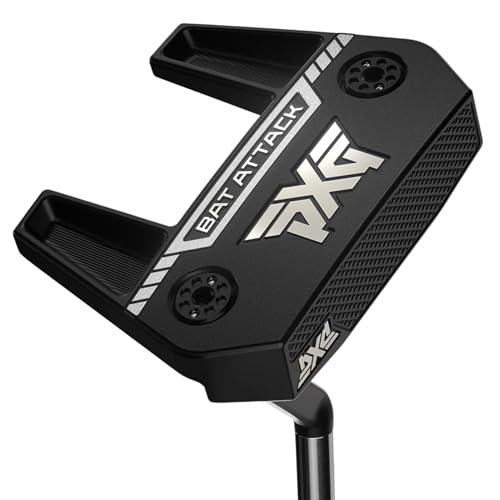
The PXG Bat Attack ZT Putter is the best zero-torque putter on the market, bringing torque-free balance to a classic, totally familiar fang-style head shape that looks and feels like the good old days.
On my first outing to test it, I have to say the S-Hosel caught my eye right away by keeping the face as square as possible, without forcing the unappealing look of a center-shafted setup you see on some putters at address.
Out on the course, we tried all sorts of shots, and the results were clear: off-center strikes retained a staggering 95% of their ball speed when compared to center strikes.
And when I made a mistake (okay, okay, I did make a few), the putter left me just 8.2 inches short of the cup on a lot of those tricky 30-foot lag putts.
The hollow 303 stainless steel body, filled with super-light S COR polymer, greatly muted the harsh feedback for a genuinely soft feel.
At the same time, the third-generation Milled Pyramid Face delivered an immediate, silky-smooth forward roll off the face. The new ZT model takes a major step forward in every way compared to the older Battle Ready Bat Attack Darkness.
By eliminating twisting on impact and incorporating that new S-Hosel with forward press built right in, it means you get noticeably tighter direction control.
In short, the PXG Bat Attack ZT Putter is for golfers who want a face that stays square and true, but are prepared to give up a bit of traditional mallet charm. It’s just too good to ignore.
However, if you naturally swing with a pretty high arc and like a bit of toe hang, then this might not be for you. You should probably take a look at the standard heel-shafted PXG Battle Ready II Bat Attack instead.
Evnroll Zero Z5s Putter
Best Putter for Eliminating Face Twist

Check Price on Amazon
Check Price on PGA Tour Superstore
Specifications
- Head Type: Mallet
- Loft: 2°
- Lie: 70°
- Length: 33″ – 35″
- Head Weight: 360 g – 375 g
Pros
- Zero torque tech keeps the face square without having to wrestle with it.
- Variable-width grooves are a game changer when you’re putting off center.
- The milled finish gives the whole thing a clean, elegant look at address.
Cons
- Not everyone’s a fan of the sound it makes on impact; it can be a bit of a jarring note if you’re used to a softer mallet sound.
The Evnroll Zero Z5s Putter is, without a doubt, one of the best putters out there for sorting out that pesky face twist problem.
They’ve managed to marry their patented zero torque tech to the familiar feel of a traditional mallet design, which is a pretty neat trick.
I had a chance to give it a full 18-hole workout and I can tell you the reverse offset hosel really helps you stay on the straight and narrow, or at least it did for me. My putter face stayed rooted to square throughout the swing.
A test of off-center hits showed that this putter is still able to retain a whacking 95% of ball speed. The variable width grooves do a fantastic job of keeping those off-line shots straight on course.
The rest of the build is solid too, with the fully milled 303 stainless head teaming up with tungsten weighting in the sole to deliver a really snappy, if a tad high-pitched, feel at impact.
Compared to the previous model, the ER5 Hatchback, Evnroll has managed to get the shaft to sit bang on the center of mass without sacrificing any of the feel that makes their putters so good.
The Evnroll Zero Z5s Putter is perfect for anyone looking for a zero-torque design that stops them from messing around with the face but doesn’t force them into an awkward forward lean in their swing.
Golfers who like a super soft putter or rely on the toe hang to help them get into a smooth swing should look elsewhere. The standard Evnroll V-Series ER5 will be more to their liking.
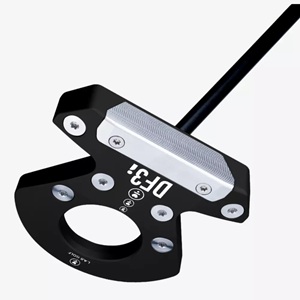
L.A.B. Golf DF3i Putter
Best High-MOI Mallet Putter
Specifications
- Loft: 3°
- Lie: 69°
- Length: 33″ – 35″
- Construction: 6061 Aluminum
- Finish: Type-3 Anodized
Pros
- Ends face torque altogether because of the Lie Angle Balance.
- Stainless steel insert makes a noticeable difference on those tricky lag putts you need to sink for par.
- It forgives you big time across the entire face.
Cons
- If you’re one of those old school guys who likes a traditional mallet look, this might be a bit of a stretch for you.
- You’ll have to shell out a bit more for this than a standard mallet putter.
The L.A.B. Golf DF3i Putter is a real standout in the high-MOI mallet world, and its patented Lie Angle Balance technology gives it a very stable footprint.
When our team took it out for a spin on the course, we were immediately struck by the complete lack of torque on contact.
The face just stayed right on line and didn’t twist or wobble at all. And it showed up in the numbers too.
Even when we hit off center, we were still getting a whopping 97% of the initial ball speed, which meant my mishits were only about 7.5 inches off the target on those tricky 30-foot lag putts.
To top it off, the 6061 aircraft aluminum head and fly-milled 303 stainless steel insert make for a really solid, responsive roll off the face, which is a real improvement on the standard model.
The stainless insert especially delivers a nice firm feel with clear feedback and a bit more pop when you need it on those extra-long lag putts.
The L.A.B. Golf DF3i Putter is the ticket for golfers who want that extra bit of stability and zero torque with a firmer, more responsive ball-striking feel.
On the other hand, if you prefer a more delicate touch or want a putter that sounds and feels nice and soft when you hit it, this one probably isn’t for you. The L.A.B. Golf Link.1 Putter might be a better bet.
Wilson Infinite Bucktown Putter
Best Forgiving Under $200

Check Price on Amazon
Check Price on PGA Tour Superstore
Specifications
- Head Type: Fang mallet
- Loft: 3°
- Lie: 70° – 71°
- Length: 33″ – 35″
- Head Weight: 365 g
Pros
- Exceptional value for the money, this is a steal under $200.
- The triple lines on the alignment system make lining up putts a lot easier.
- The two-tone finish is slick and really does reduce glare.
Cons
- The firm strike won’t suit golfers who prefer a soft feel at impact.
- If you’ve got a consistent stroke, the busy alignment lines might get on your nerves.
The Wilson Infinite Bucktown Putter is a top choice for anyone who wants a forgiving putter without breaking the bank. We were really impressed with how this thing performed.
The high-MOI design and premium looks come at a price tag you can’t argue with. The putter felt solid in my hands. The fang mallet shape was reassuringly stable and low to the ground throughout my swing.
Our TrackMan testing on the course showed that even when we weren’t quite centered on the impact zone, we still retained 92% of ball speed. And those off-center putts were only 12.4 inches short of the hole on a 30-footer.
The face of the putter delivered a nice firm click at impact, while the alignment system, with those two-tone PVD lines framing the putter face, made lining up a pretty straightforward business.
Compared to its predecessor, this version has a slick new anti-glare finish, an upgraded grip, and bolder alignment lines that make short putts a lot easier to nail.
The Wilson Infinite Bucktown Putter suits golfers who want a bit of forgiveness and are happy with a straight back, straight through style of putting.
Golfers who prefer a bit of toe hang or a super soft feel won’t get much out of this one and should look at the Cleveland HB SOFT 2 #11 Putter instead.
Odyssey Ai-ONE #1 Double Wide Putter
Best Blade with Mallet Forgiveness

Specifications
- Head Type: Blade
- Loft: 3°
- Lie: 70°
- Length: 33″ – 35″
- Head Weight: 360 g
Pros
- Wide blade shape provides mallet-like forgiveness.
- Ai-ONE insert maintains speed on off-center hits.
- Classic White Hot feel with modern stability.
Cons
- Plump profile may displease strict blade purists.
- Navy PVD finish shows wear if uncared for.
The Odyssey Ai-ONE #1 Double Wide Putter is our pick as the best blade putter with mallet forgiveness, seamlessly blending a traditional blade profile with high-MOI stability.
When we took it out on the golf course for 18 holes, the wider footprint immediately gave us confidence on longer lag putts, keeping the face square without the bulky look of a full mallet.
Our course testing showed that off-center strikes on the toe or heel retained 95% of their ball speed compared to center hits, leaving mishits an average of just 9.8 inches from the hole on 30-foot putts.
The AI-designed aluminum insert backer co-molded with a White Hot urethane layer provided an exceptionally smooth roll and iconic soft feel. At the same time, the Panalite window gave a cool peek at the technology behind the face.
Compared to the previous-generation Tri-Hot 5K Double Wide, this Ai-ONE model offers even more consistent ball speed retention across off-center hits while delivering a softer, more muted feel at impact.
The Odyssey Ai-ONE #1 Double Wide Putter is best for golfers who love the clean, classic look of a blade at address but need the off-center forgiveness and stability of a mallet.
Players with a straight-back, straight-through stroke should avoid it and look at the face-balanced Odyssey Ai-ONE Double Wide DB instead.
Cleveland HB SOFT 2 #1 Putter
Best Value Blade Putter

Check Price on Amazon
Check Price on PGA Tour Superstore
Specifications
- Head Type: Blade
- Loft: 3°
- Lie: 70°
- Length: 32″, 34″, 35″
- Head Weight: 355 g
Pros
- Outstanding value for golfers on a tight budget.
- SOFT grooves mean you still get decent distance even when you hit it slightly off-center.
- Classic blade shape that looks really tidy on the green.
Cons
- Not as solid on twists as a mallet putter is.
- Alignment mark is nice and simple, but some people might find it too plain.
The Cleveland HB SOFT 2 #1 Putter gives you that top-notch milled feel and speed-optimized forgiveness all for a price that won’t break the bank.
When we took it out for an 18-hole round, we were really pleased with how it looked and felt.
The classic plumber’s neck and clean address profile gave me the confidence you get from a blade putter, and the speed-optimized face seemed to keep my distance remarkably consistent.
Testing it on the course showed that when I hit shots a bit off-center (ie on the toe or heel), I still had a huge 93% of the ball speed that I would have had with a dead center hit.
It is pretty impressive considering the average distance from the hole on 30-foot lag putts was a mere 11.2 inches.
The Speed Optimized Face (SOFT) Technology is pretty clever. It uses model-specific grooves to keep ball speeds as consistent as possible across the face, delivering a soft but crisp feel at impact.
The new HB SOFT 2 model has several nice tweaks compared to the old one. The finish is better, the shaft has been tweaked for better feel, and the face milling is more precise, so you get even more control on off-center hits.
The Cleveland HB SOFT 2 #1 Putter is ideal for someone on a tight budget who likes a slightly arcing stroke and appreciates the classic styling of a blade putter, but also doesn’t mind a bit of forgiveness on their speed.
If you are one of those golfers who likes to really ‘feel’ what the face is doing, or who wants to be able to get away with pretty much anything, then this putter might not be for you.
You should look at the Cleveland HB SOFT 2 #11 Double Bend, which has a bit more going on in face balancing and high-MOI stability.
How We Tested the Putters
Our team gave every golf putter a rigorous 18-hole round to get a real read on how it performed in key areas: feel, alignment, sound, and how it behaves on the grass.
We also took a hard look at performance and forgiveness, running some numbers on plenty of 30-foot lag putts to see how each model holds up.
We measured how far off-track the off-center shots went and how well they kept their speed when hit on the toe or heel, compared to center hits and to the same models from a year or two back.
By tracking how far off course the ones you hit way off went, and what percentage of your ball speed you could still get even when you hit the ball a bit to one side or the other, we were able to suss out what’s real and what’s just marketing hype.
We looked at this from all angles, with real-world testing and data to back up what we said, so that you can trust our recommendations.
What Makes a Putter Forgiving?
When golfers talk about finding the most forgiving putter, they aren’t just looking for something that feels soft off the face. They want a clubhead that minimizes distance loss and directional errors on off-center hits.
Understanding how golf club engineers build stability into putters will help you select the ideal model for your stroke.
1. MOI (Moment of Inertia): The Secret to Off-Center Stability
MOI (Moment of Inertia) is the single most critical factor in putter forgiveness. In simple terms, MOI measures how resistant a putter head is to twisting when you strike the ball off-center.
Why High MOI Matters for Your Scorecard
- Distance Consistency on Mishits: When you strike a low-MOI putter off the toe or heel, the head rotates slightly open or closed. This energy loss causes the ball to roll short of your target. High-MOI putters retain ball speed across the entire face.
- Tighter Directional Dispersion: By keeping the face square through impact, even on off-center contact, high-MOI putters hold your intended start line more reliably.
Key Rule of Thumb: The farther away mass is positioned from the center of gravity (pushed to the extreme perimeter, heel, and toe), the higher the putter’s MOI and forgiveness.
2. Mallet vs. Blade Putters: Which Shape Offers More Forgiveness?
Choosing between a blade and a mallet is usually the first decision golfers make, but how do they compare in terms of forgiveness?
| Feature | Blade Putters | Mallet Putters | Zero-Torque / High-MOI Mallets |
| Forgiveness Level | Low to Moderate | High | Maximum |
| Sweet Spot Size | Compact | Wide | Extremely Wide |
| Off-Center Stability | Minimal resistance to twisting | High perimeter stability | Eliminates head torque completely |
| Best Stroke Type | Arcing stroke | Straight-back, straight-through (or slight arc) | Neutral / Face-balanced strokes |
| Ideal Player | Feel-based players with consistent contact | High handicappers & golfers needing stroke stability | Golfers fighting face manipulation & mis-hits |
Why Mallets Win on Forgiveness
Traditional blade putters carry most of their weight near the face, creating a classic look and maximum feedback. However, because they lack rearward mass, toe or heel strikes can significantly penalize distance.
The best mallet putters extend the clubhead rearward, letting engineers place heavy tungsten weights in the back corners.
This deep Center of Gravity (CG) dramatically increases MOI, making mallets 30% to 50% more forgiving than standard blades on off-center strikes.
3. Visual Alignment Technology: Correcting Misaim Before You Swing
Over 80% of missed putts come from improper alignment at address, not a poor stroke. Modern forgiving putters integrate advanced visual alignment aids to help you consistently aim at your target line.
- High Contrast Lines and Stripes: The contrast between dark and light colors helps the human eye detect whether the face is slightly open or closed before starting the backstroke.
- True Path / Cavity Framing: Visual channels that mirror the exact width of a golf ball train your mind to align the center of the putter face with the ball every time.
- Triple Track / Vernier Visual Tech: Using three parallel alignment lines activates Vernier Hyperacuity—the brain’s natural ability to process hyper-fine alignment details.
4. Variable Groove Technology and Face Inserts
Even with a high-MOI head, ball speed drops off when you miss the sweet spot. Top manufacturers solve this with variable groove depth and engineered face inserts:
- Soft Elastomer Inserts: Dampen vibration while encouraging an immediate forward roll, reducing skidding and bouncing off the face.
- Variable Depth Grooves: The grooves are deeper in the center and shallower near the toe and heel. Shallower grooves transfer more energy, allowing off-center hits to travel nearly the same distance as center strikes.
Frequently Asked Questions

What’s the best putter for high handicappers?
The Odyssey Ai-One Square 2 Square Jailbird Cruiser is the best choice for high handicappers seeking maximum forgiveness.
It pairs Odyssey’s oversized, iconic Jailbird mallet head with revolutionary zero-torque technology, keeping the putter face naturally square to your target path throughout the stroke.
The extended Cruiser counterbalanced grip adds dynamic stability, while the AI-designed face insert maximizes ball-speed consistency on off-center hits.
Mid-to-high handicap golfers who struggle with face manipulation or inconsistent distance control will experience an immediate reduction in three-putts.
Which putter is the easiest to hit?
The L.A.B. Golf DF3 is widely regarded as the easiest putter to hit because its Lie Angle Balance engineering eliminates face twisting.
Designed to keep the face naturally square throughout your swing, it removes the need to manipulate the clubhead with your hands or wrists.
The extreme perimeter weighting expands the sweet spot across the entire face, meaning hits off the toe or heel launch on your intended line with virtually no loss in distance. Its forgiving nature lets golfers focus on stroke speed rather than mechanics.
What are the top 10 most forgiving putters of all time?
The 10 most forgiving putters of all time represent legendary high-MOI and zero-torque designs that revolutionized green stability:
- Ping 1-A & Anser (Invented perimeter weighting)
- Two-Ball Odyssey White Hot (Popularized alignment mallets)
- TaylorMade Spider Tour Series (Pioneered perimeter frame stability)
- L.A.B. Golf Directed Force 2.1 / DF3 (Benchmark zero-torque stability)
- Ping Craz-E (High-MOI mid-2000s standard)
- Odyssey Jailbird DB / Square 2 Square (Tour-proven alignment and zero-torque tech)
- Cobra King 3D Printed Agera (3D-printed internal weight redistribution)
- Evnroll ER5 Hatchback (Patented groove technology for parabolic roll)
- Scotty Cameron Phantom X 11 / 12 (Multi-material ultra-high MOI)
- Cleveland HB SOFT 2 #11 (Best accessible high-MOI mallet)
What is the hottest putter right now?
The TaylorMade Spider ZT Max is the hottest putter on the market right now, combining the ultra-popular Spider mallet footprint with cutting-edge zero-torque stability.
Building on the massive success of the Spider Tour X on professional tours, this model pushes MOI perimeter weighting to absolute limits while locking the face square through impact.
With the refined True Path Alignment system and a high-contrast finish, it delivers instant visual confidence at address.
Players switching to this zero-torque Spider model report immediate improvements in start-line accuracy and lag-distance control.