What Causes a Shank in Golf?
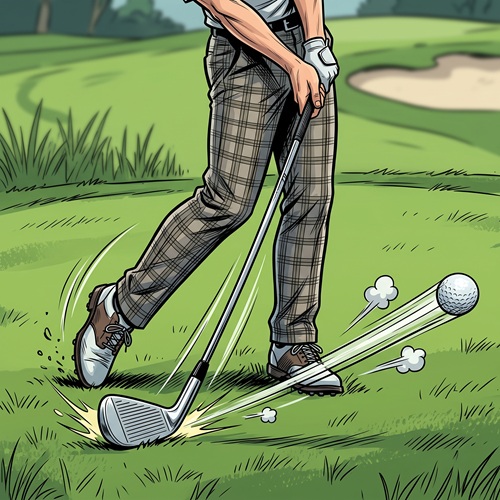
What causes a shank in golf is impact made on the hosel of the club rather than the sweet spot of the club face, sending the golf ball shooting low and sharply to the right.
This devastating strike occurs when improper swing mechanics, poor hand distance, or severe movement in your lower body cause the club head to extend roughly half an inch further away from your body at impact than where it started at address.
If you’re an amateur golfer who fights the shanks, or wants to prevent them before they show up, understanding why this occurs is the single fastest way to rebuild confidence on the course.
While hitting the dreaded shank can instantly ruin a round and create mental anxiety, it is actually one of the easiest swing faults to eliminate once you diagnose the root cause.
Below, you’ll learn:
- the anatomy and physics of the shank
- the setup and swing faults that cause it
- the mental and physical factors that make it worse
- the drills that help you identify and fix it.
Anatomy of the Dreaded Shank
To cure shanking problems permanently, you must first understand the precise physics at impact.
The golf club has two distinct impact zones: the flat face, which contains the sweet spot, and the rounded metal socket where the club shaft connects to the head, known as the hosel.

On a normal shot, the club head travels along a predictable swing path and strikes the golf ball near the center of the clubface.
However, when the club moves even slightly closer to the ball during the downswing, the flat face misses the ball entirely, and contact occurs on the rounded hosel.
The rounded shape forces the ball flight to veer violently to the right (for a right-handed player) with virtually no loft, often accompanied by a harsh metallic feel and lower swing speed.
Primary Setup Flaws That Lead to Shanked Shots
Fixing shanks often requires looking no further than your static posture before the golf swing even begins.
Poor alignment, balance errors, and incorrect ball position create severe spatial errors before you take the club back.
Standing Too Close or Too Far
Standing too close to the ball forces your arms to crowd your body, giving you zero clearance during the downswing.
Conversely, standing too far away makes you reach, forcing your weight onto your toes.
As your swing develops, your body naturally pulls back toward its center of balance, pushing the club shaft dynamically outward into a shank.
Faulty Setup Position and Arm Hang
At address, your arms hang naturally straight down from your shoulders without excessive tension or unnatural reach.
If your grip pressure is far too tight or your left hand is twisted awkwardly, your wrists lock up, preventing proper hinge and release through impact.
Improper Weight Distribution
Proper weight distribution at address should sit evenly on the balls of your feet. If your body leans toward your toes, poor
Weight shift and any momentum generated during the top swing will throw your center of gravity forward toward the target line, shoving the heel of the golf club directly into the ball.
Swing Mechanics That Push the Club Head Outward
While setup forms the foundation, dynamic movement errors during the downswing are the major drivers behind consistent heel strikes.
Early Extension: The Ultimate Shank Generator
Early extension occurs when your hips move forward toward the golf ball during the downswing instead of rotating backward around your spine.
When your pelvis thrusts forward, your lower body blocks your hands from swinging freely.
To make room, your hands push outward, shifting the club head away from your body and thrusting the hosel directly onto the target line.
Over-the-Top and Steeper Shaft Angles
An overly steep downswing and poor shaft pitch cause the club shaft to present too sharply at impact on an out-to-in club path.
This steeper delivery shifts strike patterns toward the heel, pushing the heel of the club straight into the turf and ball and frequently resulting in a combination of a fat shot and a shank.
Extreme Inside Out Swing Path
Conversely, an excessively inside-out swing path can be equally destructive. When a golfer tries too hard to swing inside-out, the hand distance from the body grows dramatically at impact.
Sliding the left hip sideways instead of rotating it forces the arms to reach outward to make contact, presenting the hosel to the ball.
Physical vs. Mental Factors in Golf Swing Failures
When a golfer starts shanking, the problem quickly turns mental. After one poor hit, panic sets in, leading to tense muscles, death-grip pressure, and choppy practice swings.
Most golfers try to compensate by aiming further left or manually steering the clubface, which worsens the shank by keeping the club path stuck outward.
5 Practical Steps and Drills to Stop Shanking
Eliminating this painful swing flaw requires structured practice drills to restore proper strike patterns and return the club face to the perfect position at impact.
1. The Two-Ball Strike Pattern Drill
Place two golf balls side by side on the turf, spaced roughly one inch apart.
Set up addressing the outer ball, the ball furthest from your feet, but make your swing with the deliberate focus of striking the inner ball.
This great drill instantly trains your brain and hands to pull the club head closer to your body through impact, completely avoiding heel contact and returning your strike to the sweet spot.
2. The Headcover Obstacle Method
Place an empty wood headcover or a plastic tee approximately half an inch outside the toe of your golf ball.
If your downswing path drifts outward toward the target line, your club shaft or head will strike the headcover before hitting the ball.
This visual boundary provides immediate, physical feedback, forcing you to keep your club path clean, square, and centered throughout the entire movement.
3. Maintaining Posture and Clearing the Left Hip
To defeat early extension, place an alignment stick vertically against your glutes at address.
During the downswing, focus on pulling your left hip back away from the ball so it maintains constant contact with the stick as it rotates.
Clearing the lower body creates ample room for your arms to swing through naturally, preventing your pelvis from thrusting forward and pushing the hosel straight onto the target line.
4. Regulating Grip Pressure and Hand Path
Lightening your grip pressure to about a 4 out of 10 on a tension scale lets your wrists hinge and unhinge smoothly along the correct swing plane.
When your left hand and wrists stay relaxed, the club moves in a natural, consistent arc rather than being forced off-line by tight upper-body muscles.
Keeping your arms hanging naturally from setup through impact prevents the hand distance from expanding unexpectedly.
5. Progressive Speed Practice Swings
Start by taking practice swings and hitting short pitch shots at half speed with a wedge. Rebuilding your feel at reduced swing speed locks in proper weight transfer, solid body rotation, and clean center-face hits.
Once you can consistently strike the sweet spot at 50% effort, gradually build your tempo back to full speed without sacrificing balanced posture or a clean club path.
What causes a shank in golf?
Frequently Asked Questions
Why am I suddenly shanking my golf ball?
A sudden case of shanking your golf ball occurs when a sudden change in setup or swing tempo causes your hands and club head to drift outward away from your body at impact.
This abrupt shift pushes the hosel into the ball instead of the sweet spot.
Common triggers include standing slightly closer to the ball at address, increasing your grip pressure out of frustration, or losing your posture through early extension.
When your pelvis thrusts forward toward the target line during the downswing, it blocks your hand path, forcing your arms to push outward to make contact.
Additionally, fatigue or rushing your weight transfer can throw your balance onto your toes, shifting your entire swing plane closer to the ball.
Addressing your setup distance and slowing down your tempo usually corrects sudden shanking quickly.
How do you fix the shanks in golf?
You fix the shanks in golf by restoring proper distance between your hands and body at impact through setup adjustments, posture maintenance, and targeted practice drills.
Start by checking your setup: make sure your weight sits evenly on the balls of your feet and your arms hang naturally straight down under your shoulders.
During the downswing, focus on clearing your left hip backward rather than thrusting your lower body forward toward the golf ball.
Utilize a proven good drill like placing a headcover just outside your ball to prevent your club head from throwing outward.
Practicing half-speed swings with relaxed grip pressure allows you to regain feel and re-establish consistent contact on the sweet spot of the club face.
Professional instruction can also isolate severe swing mechanics faults if self-adjustment fails to resolve the issue.
What is the most common reason for shanking golf irons?
The most common reason for shanking golf irons is early extension during the downswing, where a golfer thrusts their hips and pelvis forward toward the golf ball instead of rotating them backward.
This lower-body movement destroys the space the arms need to drop cleanly on the inside path.
As a result, the hands are forced to push out toward the target line, extending the heel and hosel straight into the ball.
Early extension often comes from poor weight distribution at address, standing too close to the ball, or trying to lift the ball into the air rather than swinging down through impact.
Maintaining your spine angle and rotating your hips properly creates the clearance required to hit the sweet spot consistently.
Do pro golfers get the Shanks?
Yes, pro golfers occasionally get the shanks, proving that even elite players with world-class swing mechanics are susceptible to spatial and balance errors under pressure.
Because professional players swing at exceptionally high swing speeds with tight visual tolerances, a minor misalignment in hand distance or a slight balance shift onto their toes can instantly push the hosel into the golf ball.
Famous tour professionals have hit high-profile shanks during major championships when high stress caused muscle tension or blocked hip rotation through impact.
The key difference between amateurs and tour pros is that elite players recognize the root cause immediately, usually early extension or poor posture, and use practice swings to instantly recalibrate their club path and stop shanking on the very next hole.