Best Time to Buy Golf Clubs
The best time to buy golf clubs is during the late fall and winter months, specifically from October through February, when retailers drop prices to clear out inventory before the new year’s models arrive.
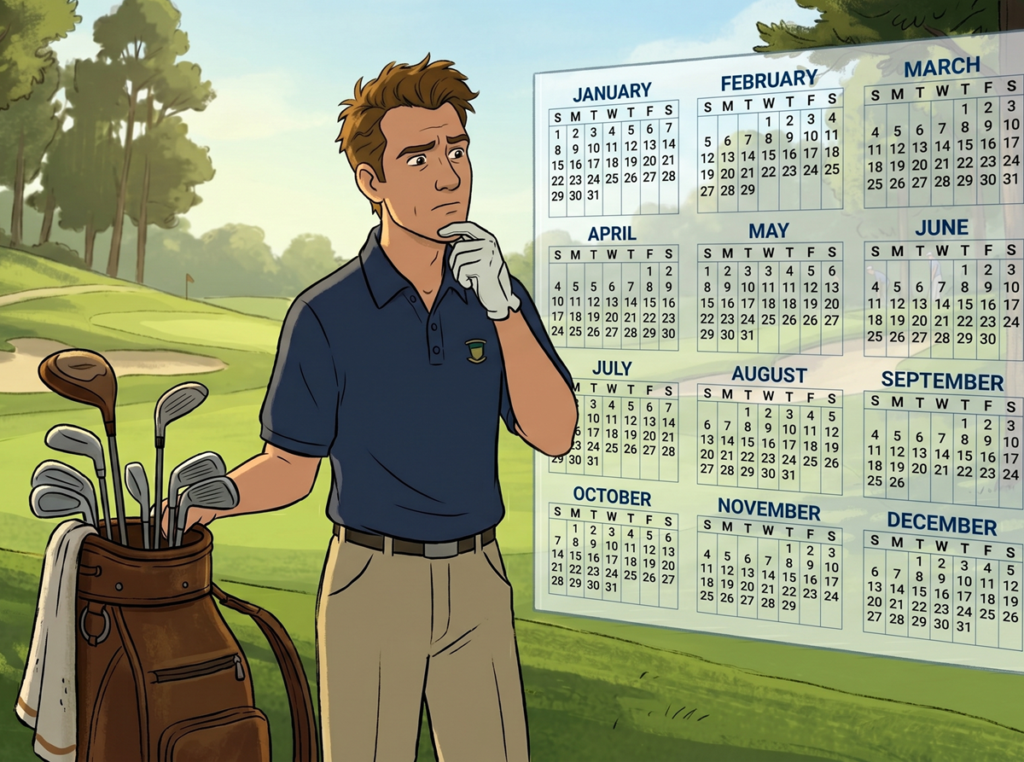
For over 25 years as a professional golfer and coach, I have watched the equipment cycle repeat itself like clockwork.
Golf club manufacturers follow a very predictable schedule: they release their flashy new models at the beginning of the year, usually around January or February. To make room on the shelves, golf stores and golf courses slash prices on last year’s models and previous models.
If you timed your purchase right, you can secure the exact same high-quality golf equipment that pros were using a few months ago, while keeping a few bucks, or even hundreds of dollars, in your pocket.
Let’s dive into how the retail cycle works, the specific seasons that offer great deals, and how to identify the right clubs for your game without spending a fortune.
Understanding the Golf Equipment Release Cycle
To understand the best time to buy, you have to look at how golf club manufacturers operate. Every year, top brands pour millions into research and development to promise you more distance, tighter shot dispersion, and better performance off the tee.
The New Product Launch (January to February)
Around January, major brands unveil their new clubs to the public. This is when marketing hype is at an all-time high.
But here is the industry secret: the difference in technology from a season’s model to the following season is often marginal. An extra yard or two of distance doesn’t always justify paying full retail price.
The Clearout Stage (Late Fall to Winter)
Because stores need physical space for the incoming new stuff, they look at their current set inventory with urgency.
As the golf season winds down in October and November, demand plummets as most people stop playing due to cold weather. This creates the perfect time for bargain hunters to look for closeout equipment.
Seasonal Breakdown: When to Buy and When to Wait
Timing your purchase depends heavily on the season. Let’s break down what you can expect to find throughout the year:
| Season | Deal Potential | What to Look For |
| Winter (Dec – Feb) | Excellent (Best Deals) | Last season’s model, clearance drivers, major retail discounts. |
| Spring (Mar – May) | Moderate | Previous models leftover stock, early season package sets. |
| Summer (Jun – Aug) | Low to Moderate | Father’s Day promotions, mid-season club adjustments. |
| Fall (Sep – Nov) | High | Post-season clearance, golf courses pro-shop sales. |
Winter: The Undisputed Champion for Savings
Without a doubt, winter is the absolute best time to buy golf clubs. Retail traffic is slow, and nobody is thinking about hitting a driver when there’s snow on the ground.
Golf stores roll out deep discounts, and online retailers offer aggressive coupon codes to move older stock.
If you want to save money on a brand-new, premium set, wait until the dead of winter, when retailers also clear out last year’s models to make room for incoming products.
Major holidays such as Black Friday and Christmas can also bring some of the season’s best prices on golf clubs.
Spring: The Beginning of the Hype
When spring arrives, golfers are eager to get out on the course and play golf. While this is an exciting time, it is generally the worst time to buy the newest releases because they are priced at a premium.
However, it is a great time to pick up any remaining last year’s models that stores are desperate to get rid of before the season hits full swing.
Summer and Father’s Day Sales
If you missed the winter window, summer does offer a few saving graces.
Father’s Day is a key shopping moment for the golf industry, so you will find great retail promotions on golf gear, fresh golf ball packs, and stand bags, though major holidays like Black Friday and Christmas often bring steeper markdowns on golf clubs than midsummer sales.
Fall: The End-of-Season Rush
As the golf season wraps up in late fall, retail demand drops significantly.
Pro shops at local golf courses often liquidate their demo clubs and rental sets during this time, giving you a great opportunity to score high-end equipment for a fraction of the cost.
Smart Alternatives: Pre-Owned Markets and Online Marketplaces
You don’t always have to buy a brand-new model year off the rack to get incredible value. The secondhand market is highly reliable and massive if you know where to look.
Used inventory also tends to improve when new models launch, since more golfers trade in sets they’ve played for a few years.
1. Callaway PreOwned
This is one of the best-kept secrets in golf. They don’t just sell Callaway, they offer certified pre-owned clubs from all the top brands.
You can find gear in “like-new” condition for a steep markdown, and buying the Pre-Generation option or last year’s model often saves money because current-year updates are usually minor.
2. Online Marketplaces
Platforms like 2nd Swing or reputable sellers on global marketplaces offer incredible prices on items that have been used only a handful of times.
3. Demo Days
Keep an eye out at local clubs during the late summer. Manufacturers host demo days where players test new gear, and the host courses often sell these slightly used floor models at deep discounts at the end of the year.
Don’t Forget the Most Important Factor: Club Fitting
While finding great deals and saving money feels fantastic, buying the wrong equipment is the most expensive mistake you can make. The right clubs for your buddy might completely ruin your swing.
Jordan’s Pro Tip: Never buy a club just because it’s on sale. A club is only a bargain if it actually improves your game.
When upgrading your current set, pay close attention to your swing speed. Golfers with slower or moderate tempos usually require lightweight, flexible shafts to achieve proper launch and distance.
Conversely, if you hit the ball with an aggressive, fast tempo, you will need a stiffer shaft to control your accuracy.
Before you purchase golf clubs, visit a professional for a club fitting.
Knowing your precise measurements: shaft flex, loft, lie angle, and grip size, allows you to scout the winter clearance sales with absolute confidence, ensuring you buy exactly what your swing needs.
Frequently Asked Questions
What time of year is the best time to buy golf clubs?
The absolute best time of year to buy golf clubs is late fall and winter, specifically from October through February.
During this off-season period, the biggest savings usually come from last season’s model and last year’s models during the January to March new release cycle or late-season clearance events in October to November.
To clear out shelf space, golf stores and pro shops heavily discount the current year’s models and closeout equipment. National chains usually have the biggest selection, but their prices tend to stay firmer early in the season.
What is the 24-38 rule in golf?
The 24-38 rule is a popular equipment guideline used to determine whether a golfer should carry traditional hard-to-hit long irons or switch to more forgiving hybrids.
The rule states that if your long iron has less than 24° of loft, or if your total clubhead speed with that iron is less than 38 meters per second (roughly 85 mph), you will likely struggle to launch the ball properly.
In these cases, swapping those long irons for a hybrid will instantly improve your launch, distance, and consistency.
Is golf good for Parkinson’s?
Yes, golf is an excellent, therapeutic activity for individuals managing Parkinson’s disease. The game inherently requires full-body coordination, precise balance, dynamic rotation, and strategy.
Navigating the shifting terrain of a golf course helps reinforce visual-spatial awareness and motor planning.
Furthermore, the rhythmic nature of the golf swing serves as effective physical therapy, helping combat muscle rigidity, improve posture, and enhance overall mobility.
What’s the 70/30 rule in golf?
The 70/30 rule is a fundamental short-game principle used for executing a proper chip shot.
It dictates that you should distribute 70% of your body weight onto your lead foot (the left foot for a right-handed golfer) and keep the remaining 30% on your trailing foot.
Maintaining this forward weight distribution throughout the entire swing forces a downward striking angle, ensuring clean contact with the ball first before hitting the turf.
Final Thoughts
If your old clubs are holding you back, don’t rush into a retail store in the middle of spring and pay top dollar for the newest marketing craze. Be patient.
Plan your search around the late fall and winter months. If you need to shop later for new equipment, check local golf course demo days in late spring, where you may find current year floor models discounted.
Keep an eye out for closeout equipment from the year’s models, leverage coupon codes on trusted online marketplaces when comparing new golf clubs, and make sure your selections line up with your physical swing speed.
By treating a new set as a strategic investment, you will get the best golf clubs for your style of play while keeping your budget fully intact. Now, get out there, find those deals, and prepare to play your best golf yet!